 Our top pick
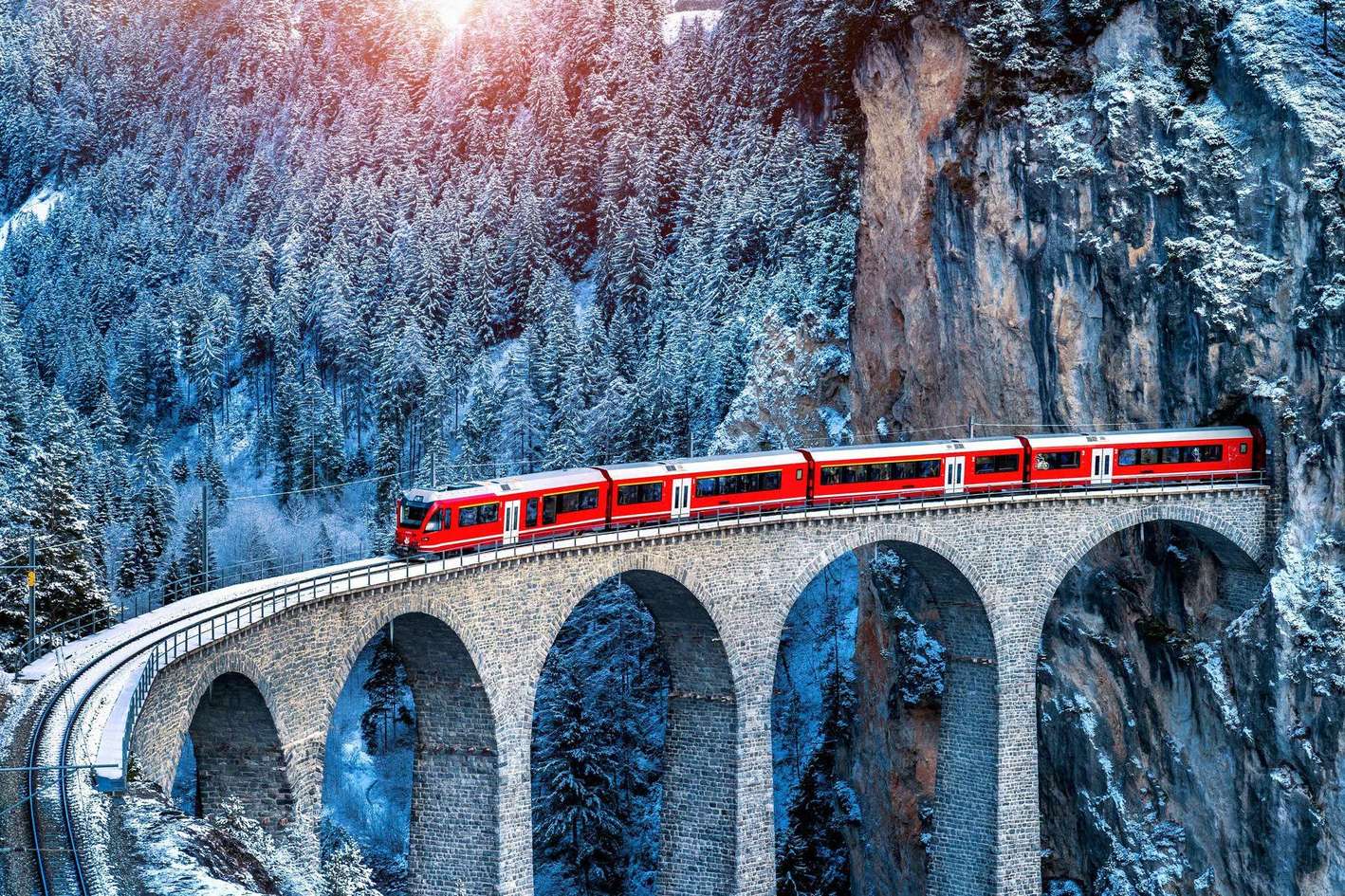
From Milan to the Swiss Alps: Bernina Red Train & St. Moritz
Guided tour through the Bernina RangeBernina Train ticketPassage through Alp Grüm and the Palü Glacier
From$109 /person
See dates and book Free cancellation
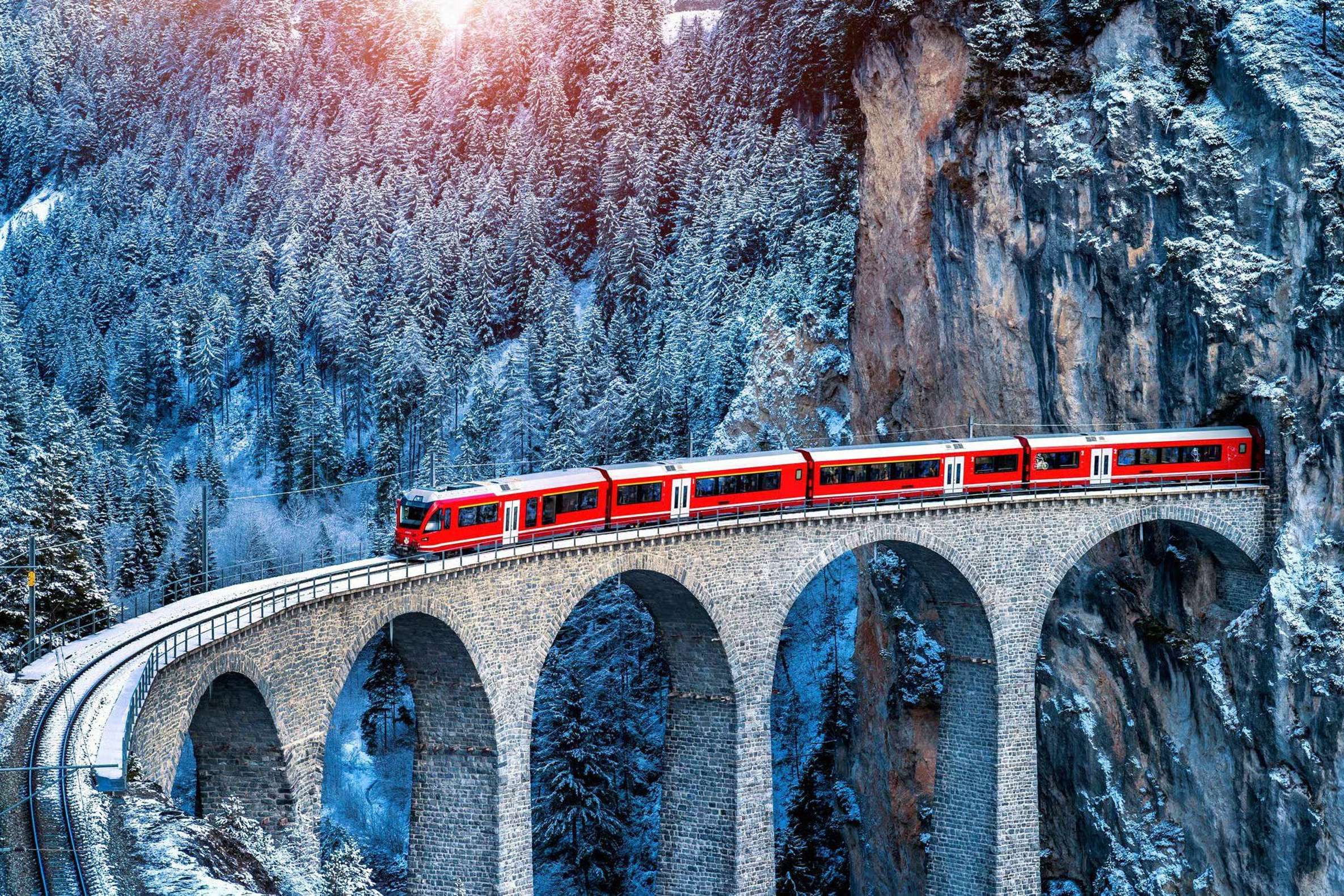
Ride the Swiss Alps by train from Milan without juggling four connections. Book a day tour that pairs a Bernina Red Train seat through tunnels, bridges and glacier views with round-trip coach from central Milan, a guide on board and free time in St. Moritz. Pick a departure and cross the pass tomorrow.
“Katya was a lovely guide. I proposed at Lake St. Moritz, one of the best days of our lives. The train ride there was spectacular. Unforgettable!”
Every tour here starts in central Milan, pairs a coach leg with a ride on a Swiss alpine rail line, and runs 11 to 13 hours door to door. Tickets, guide and return transport are all booked as one.
Our top pick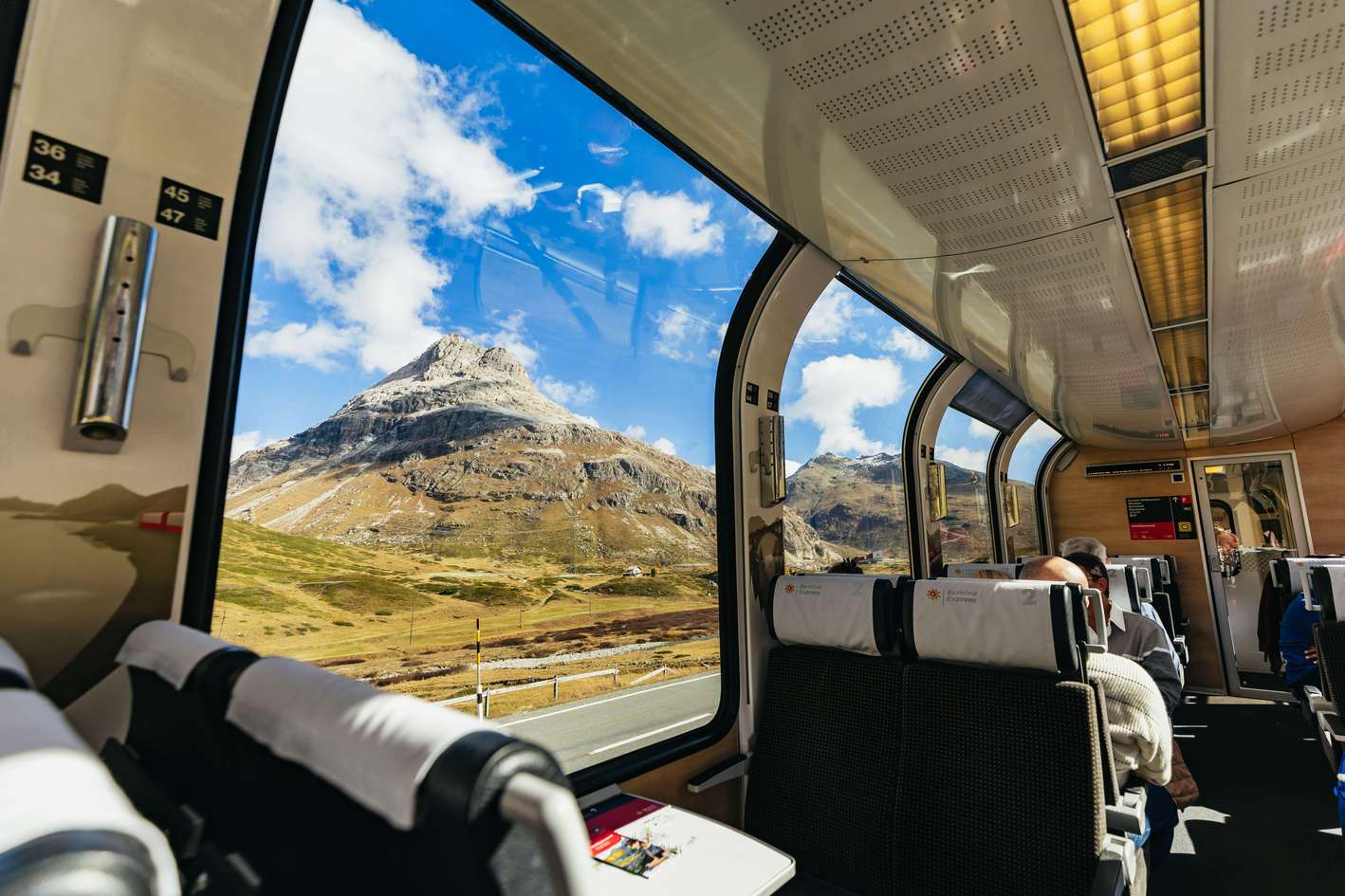
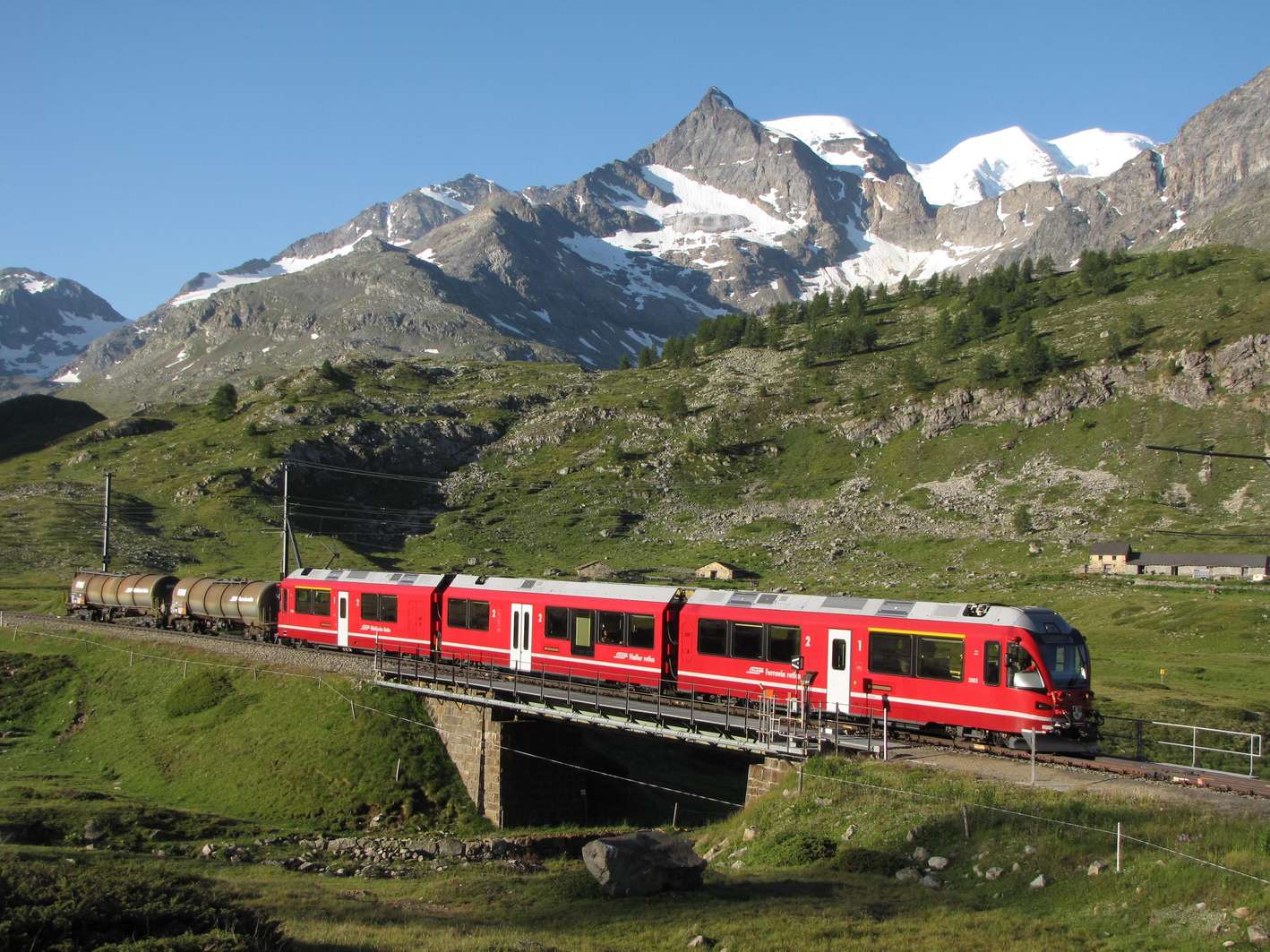
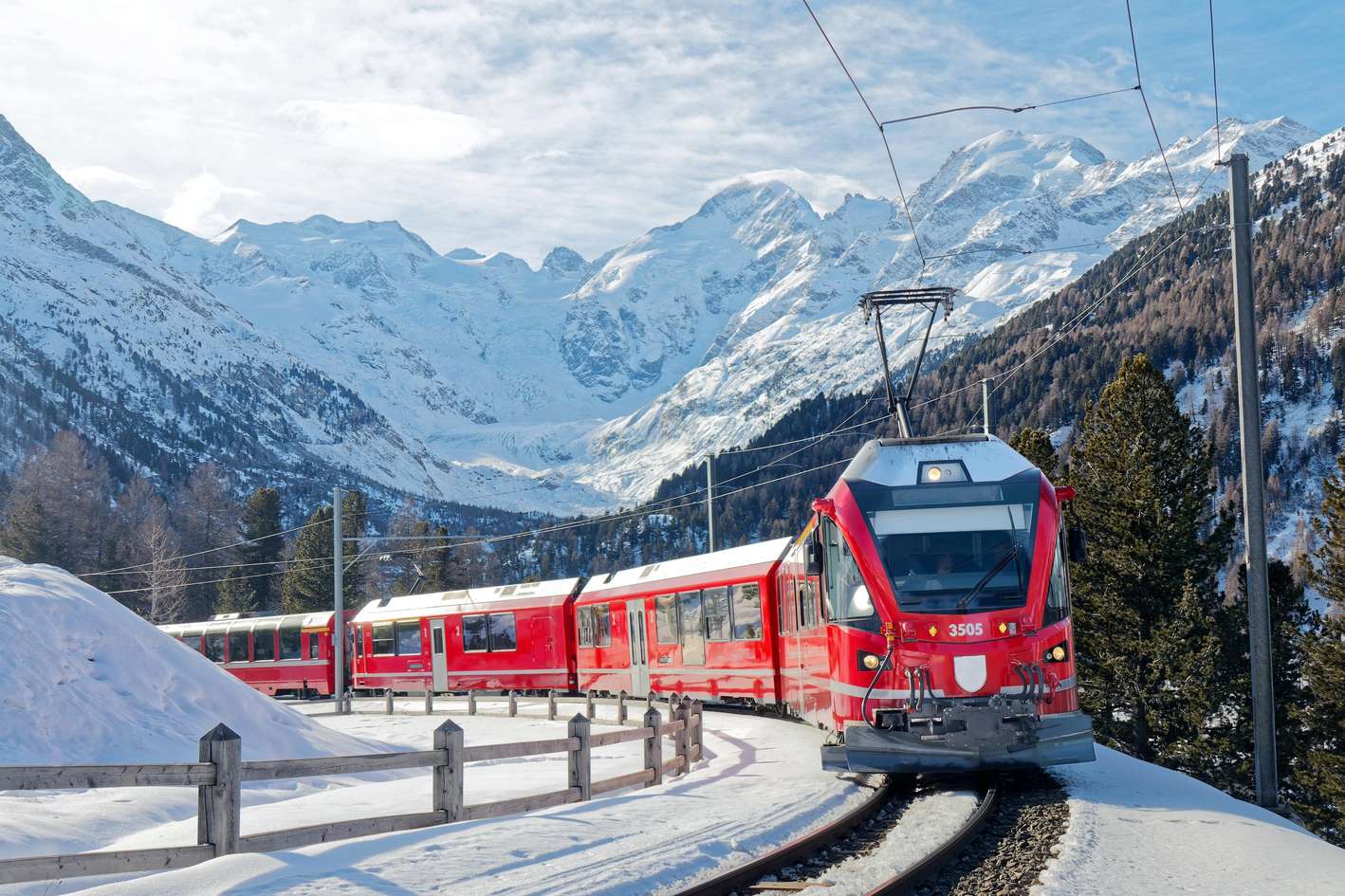
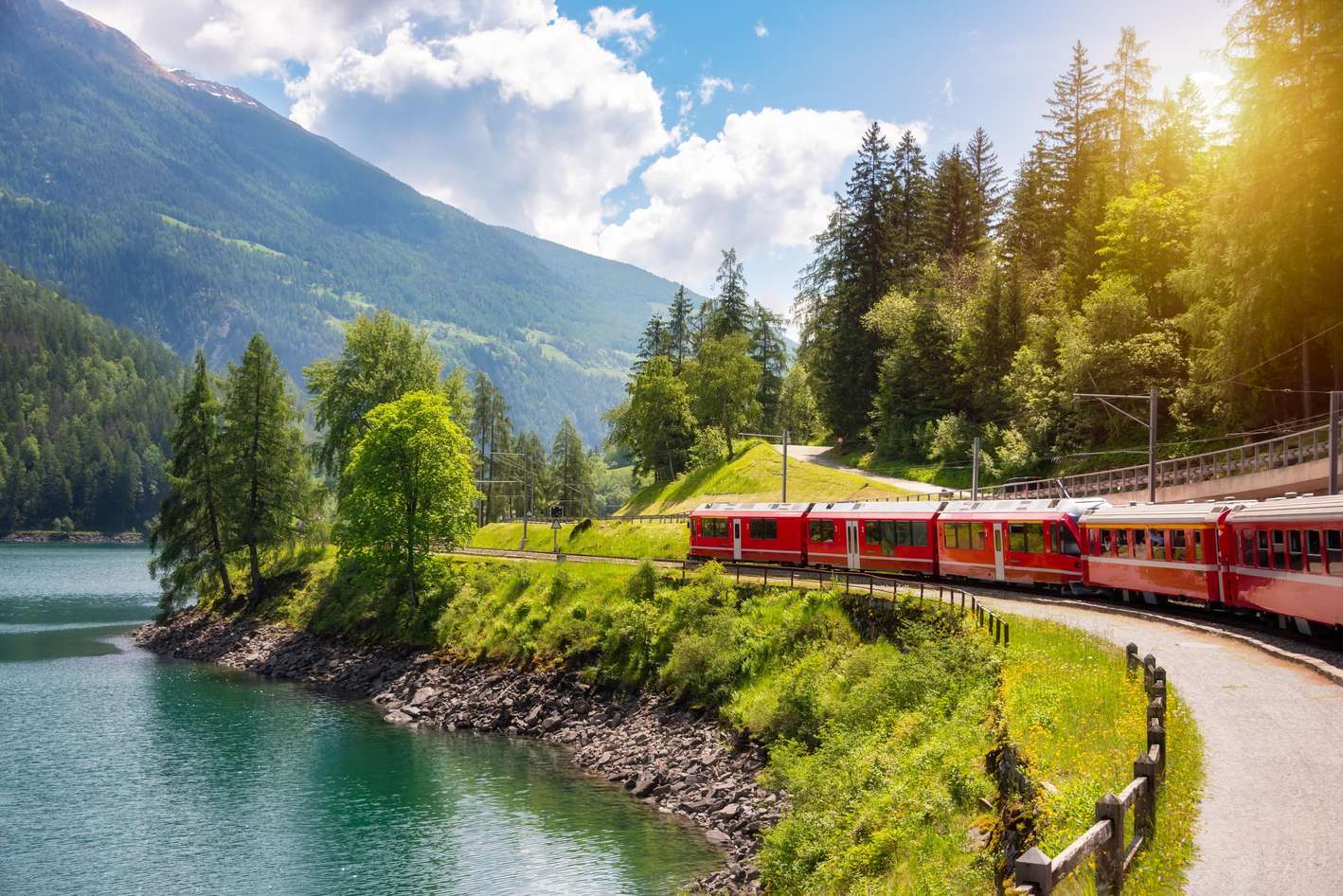
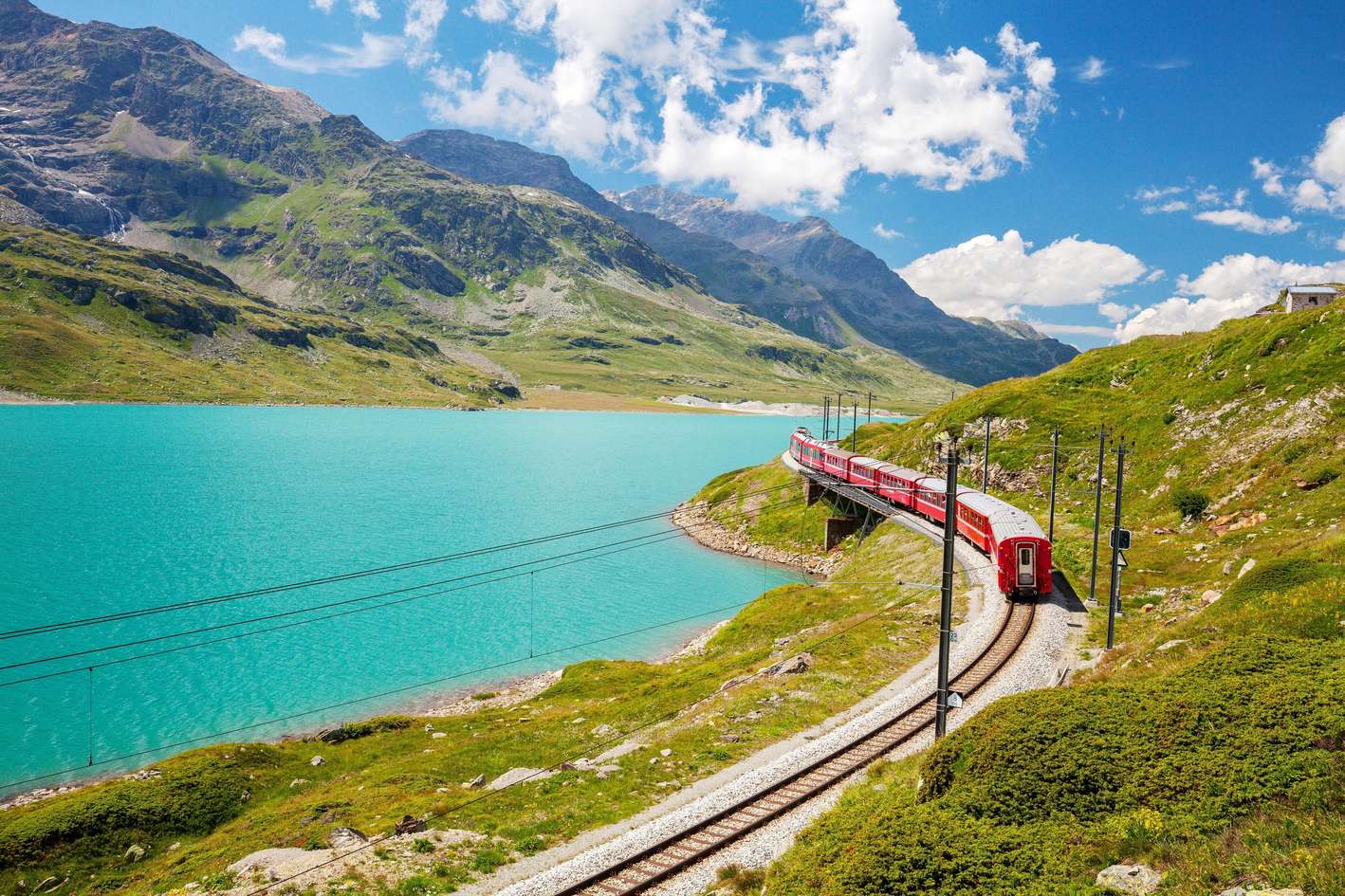
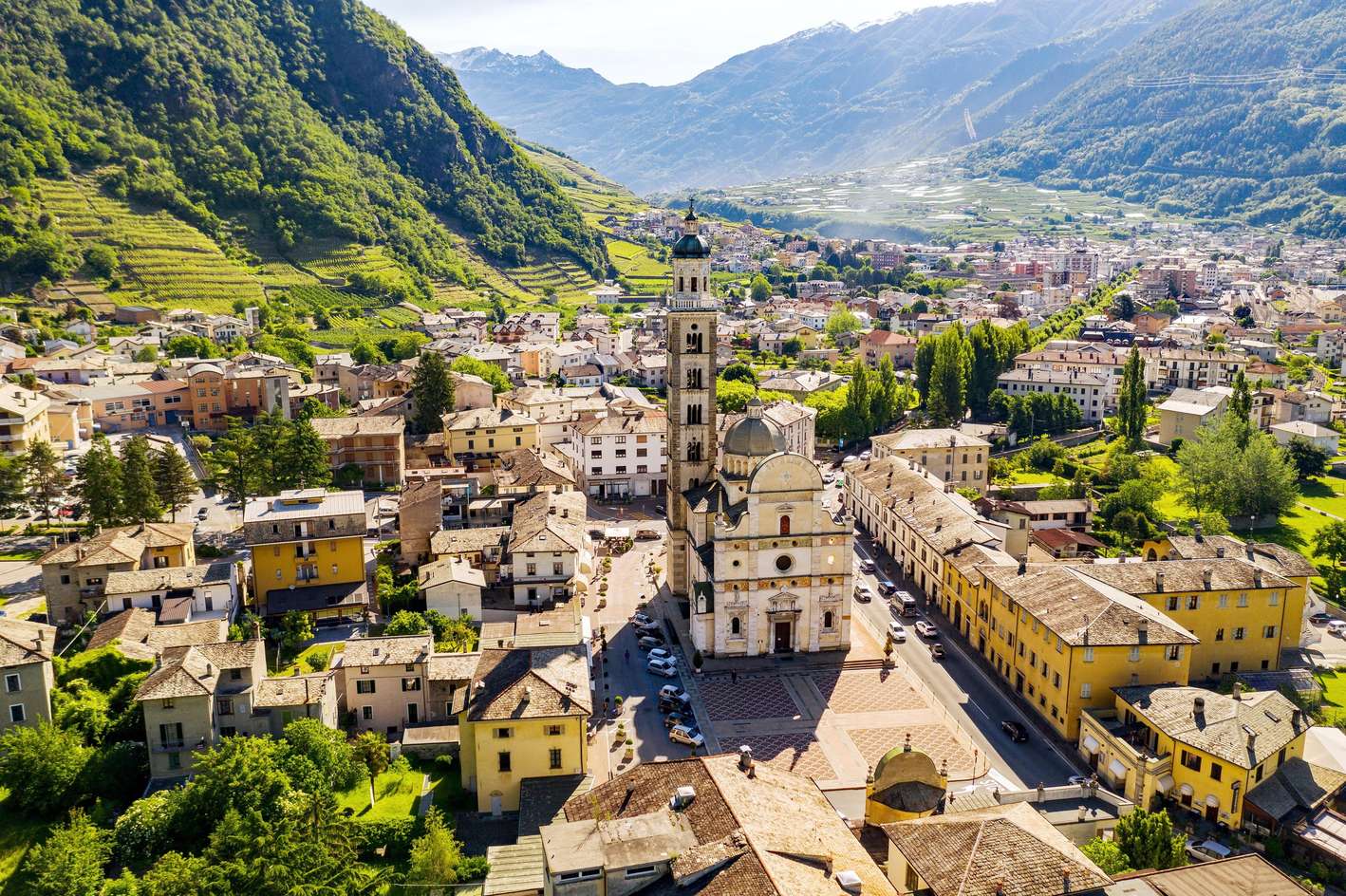
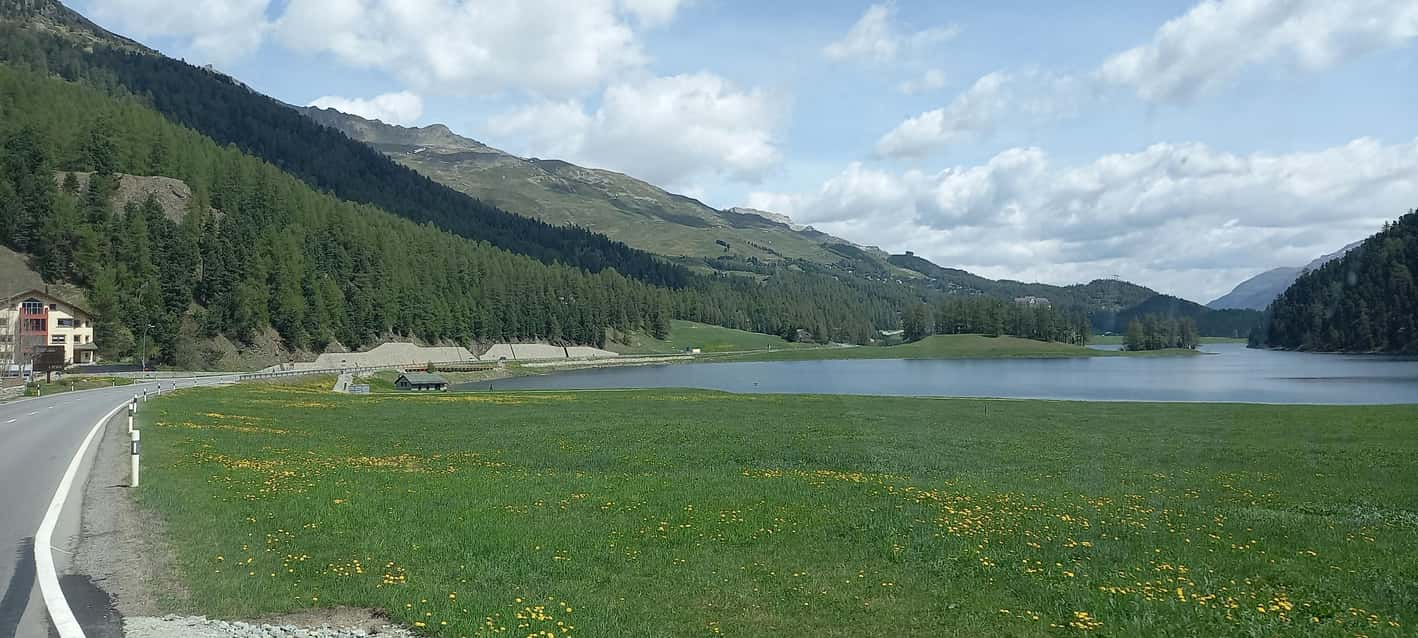

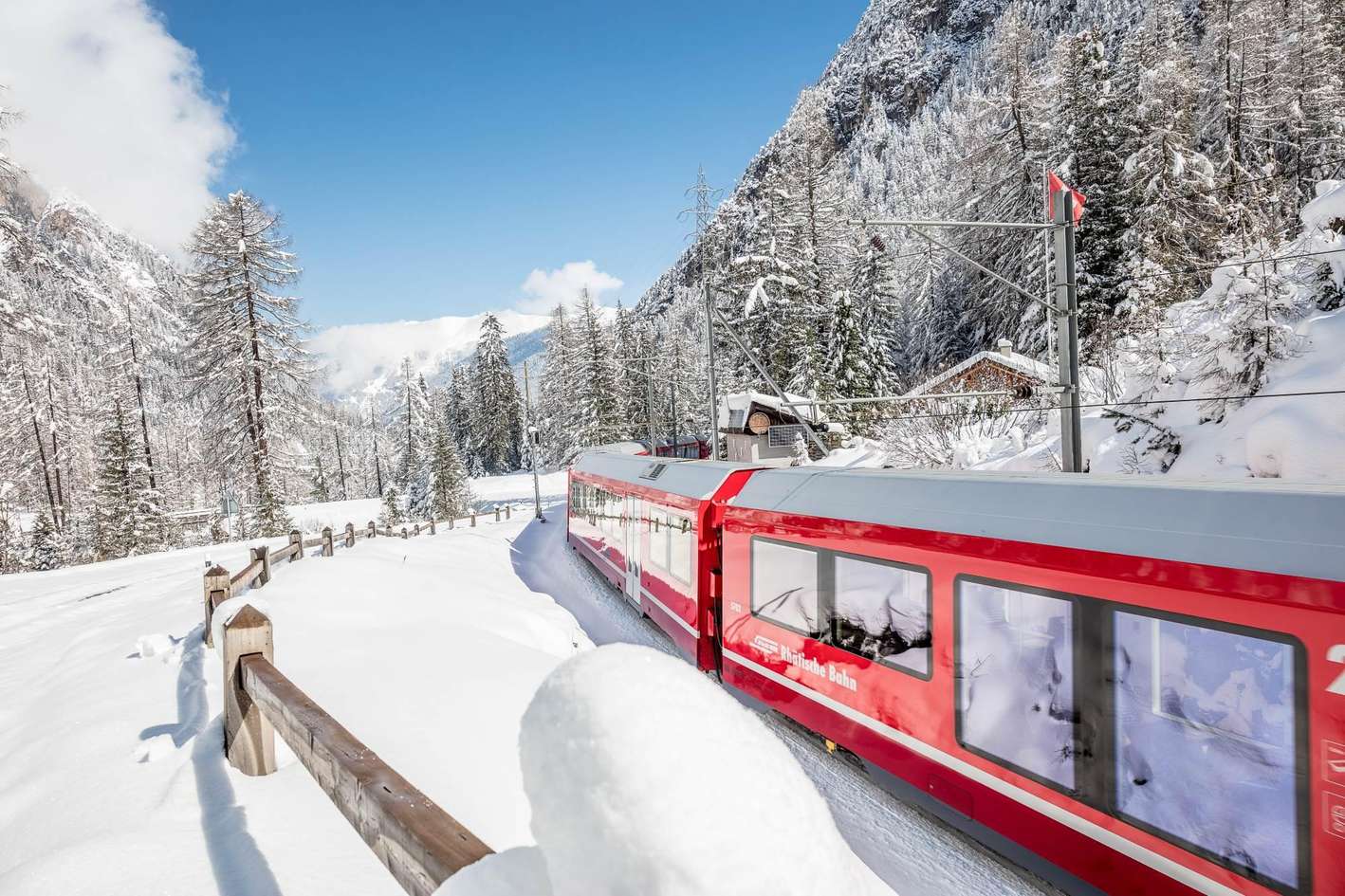
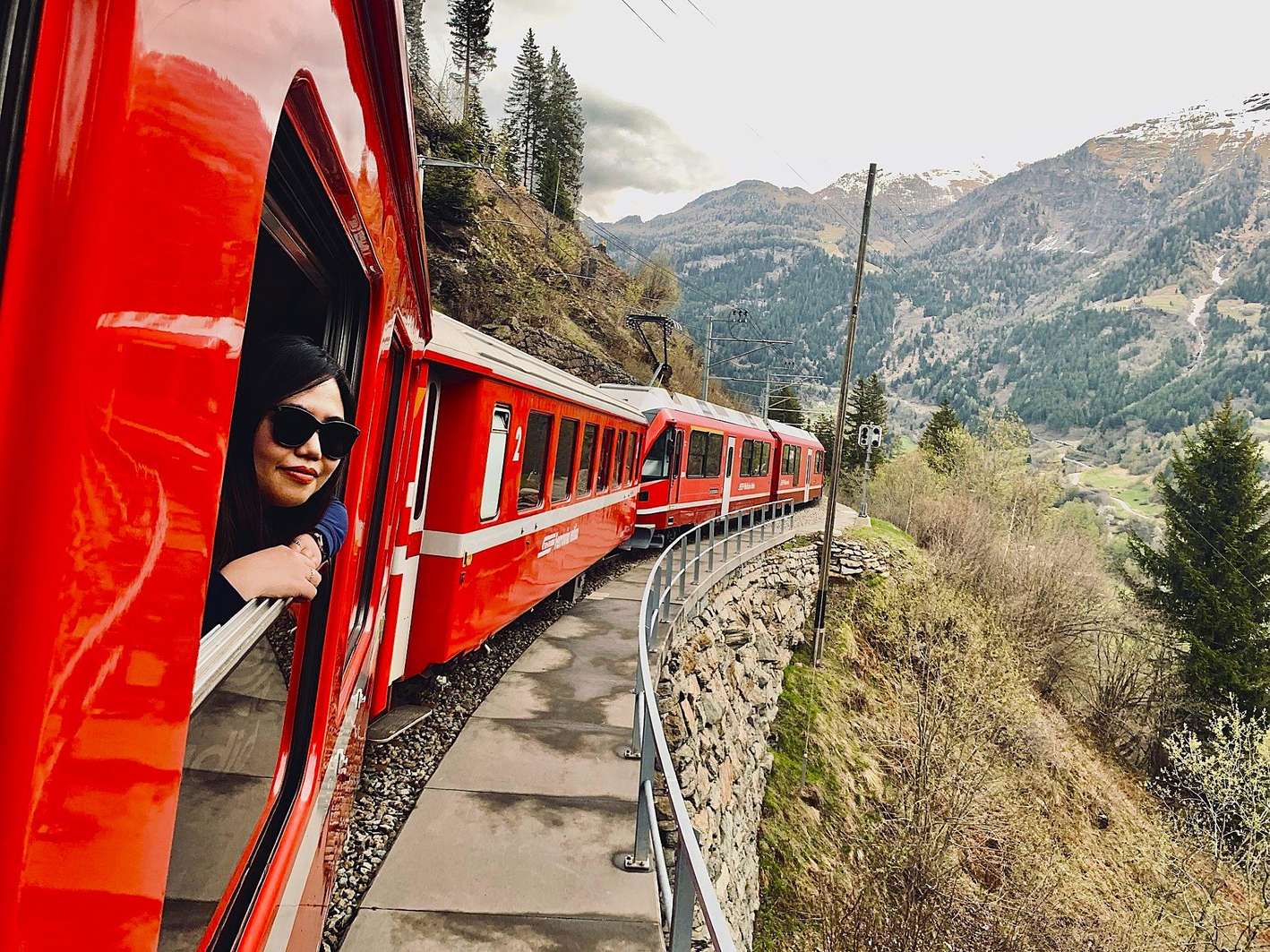
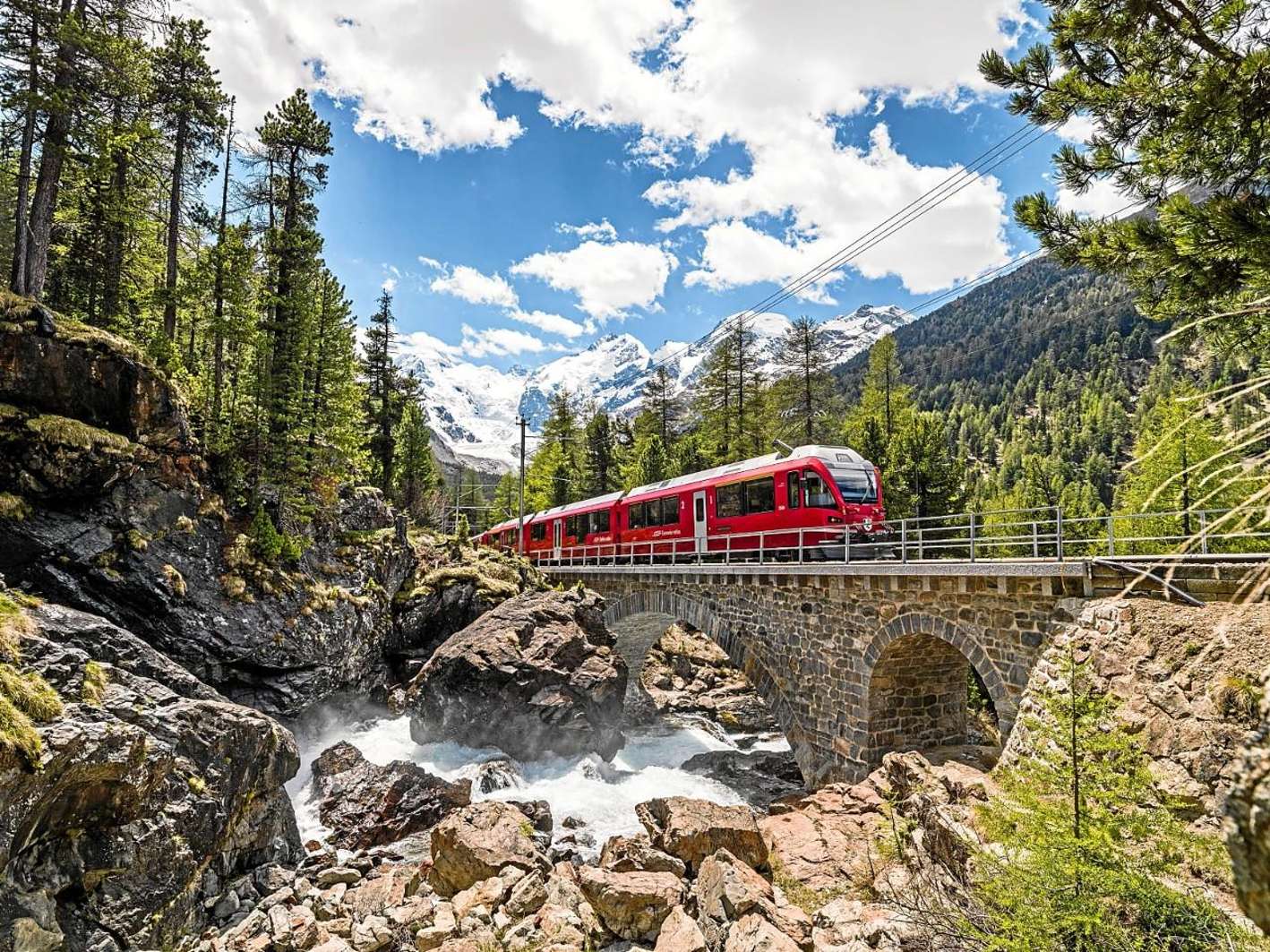

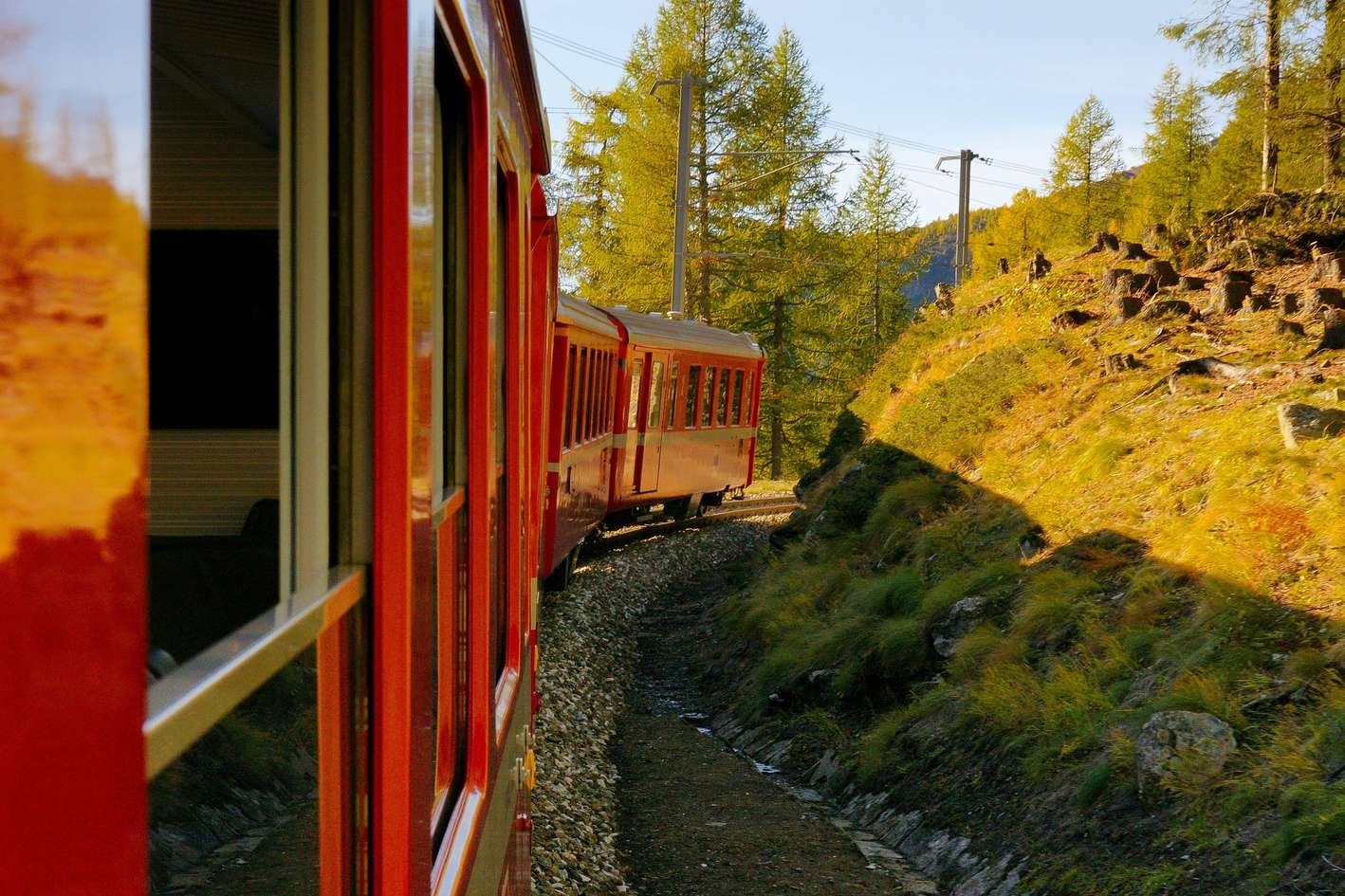
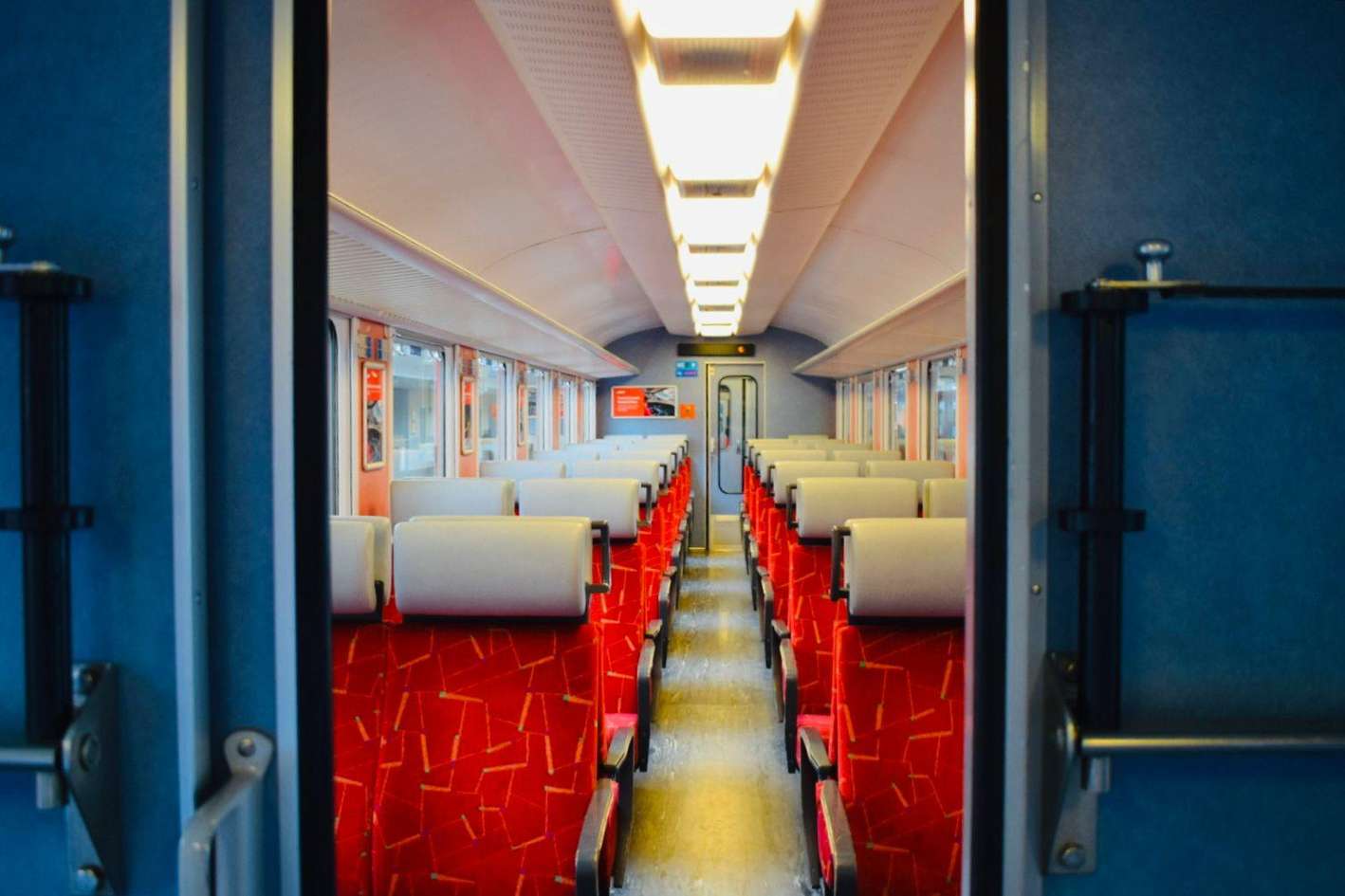
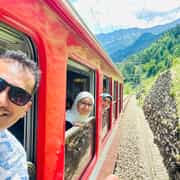


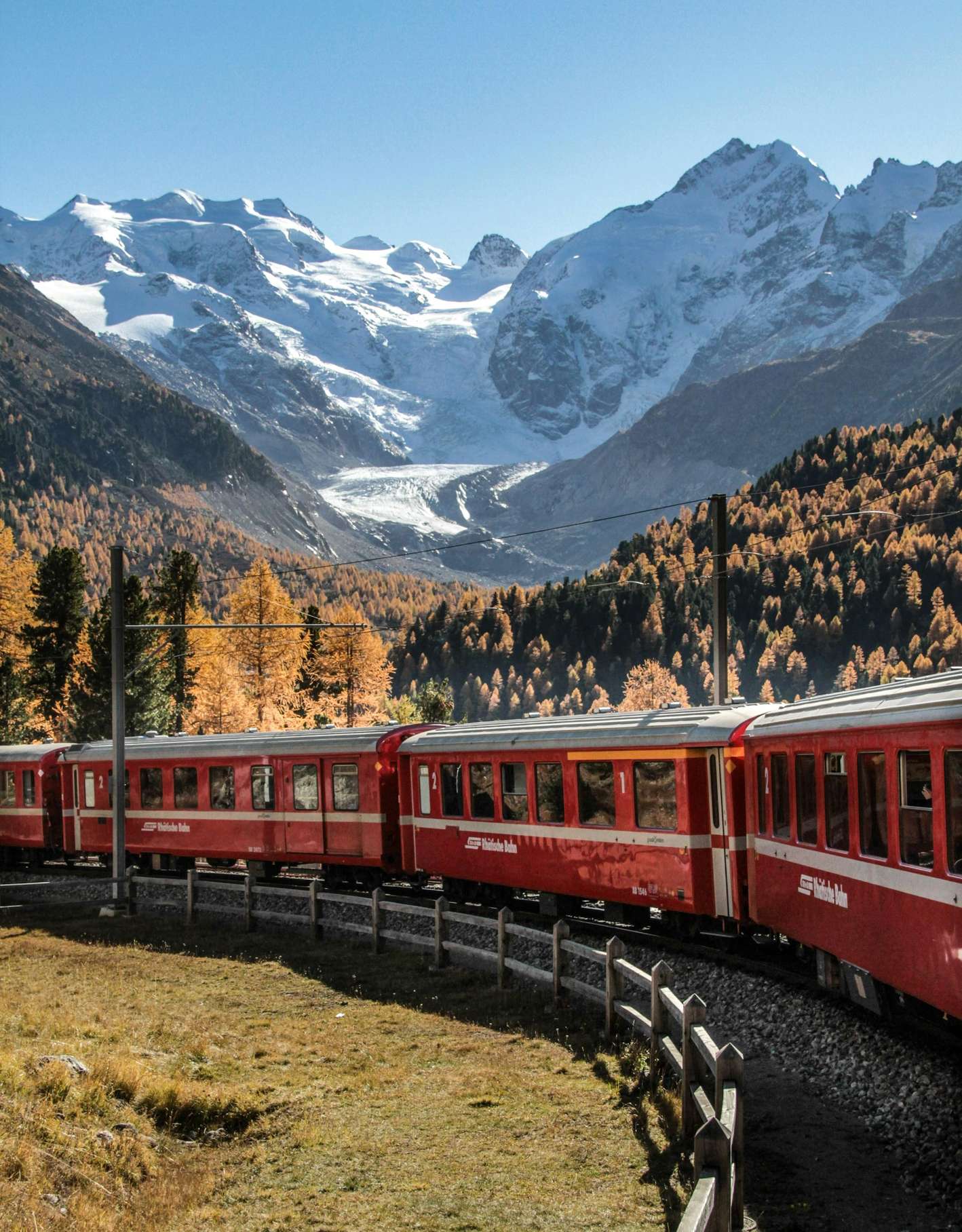
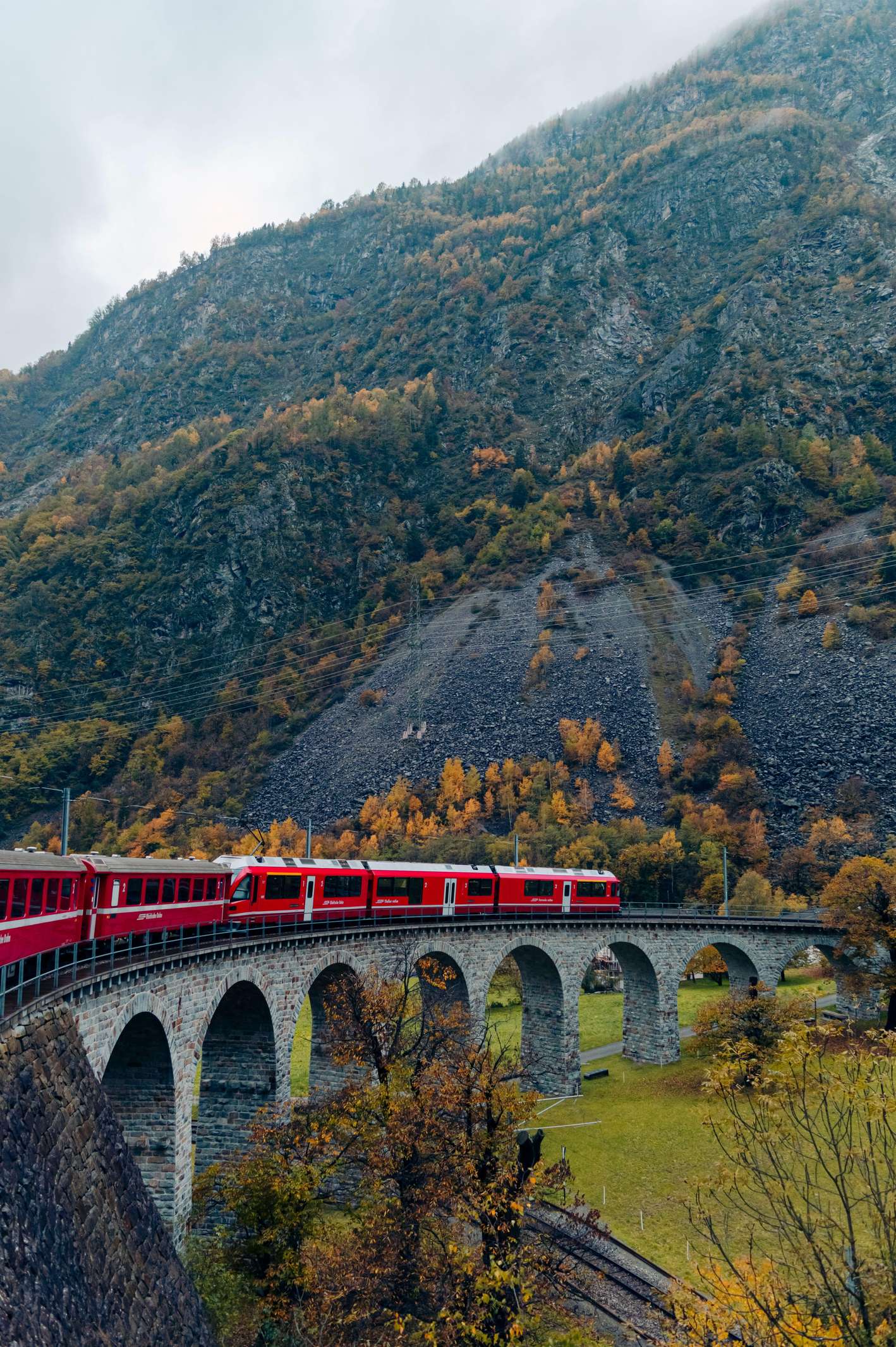
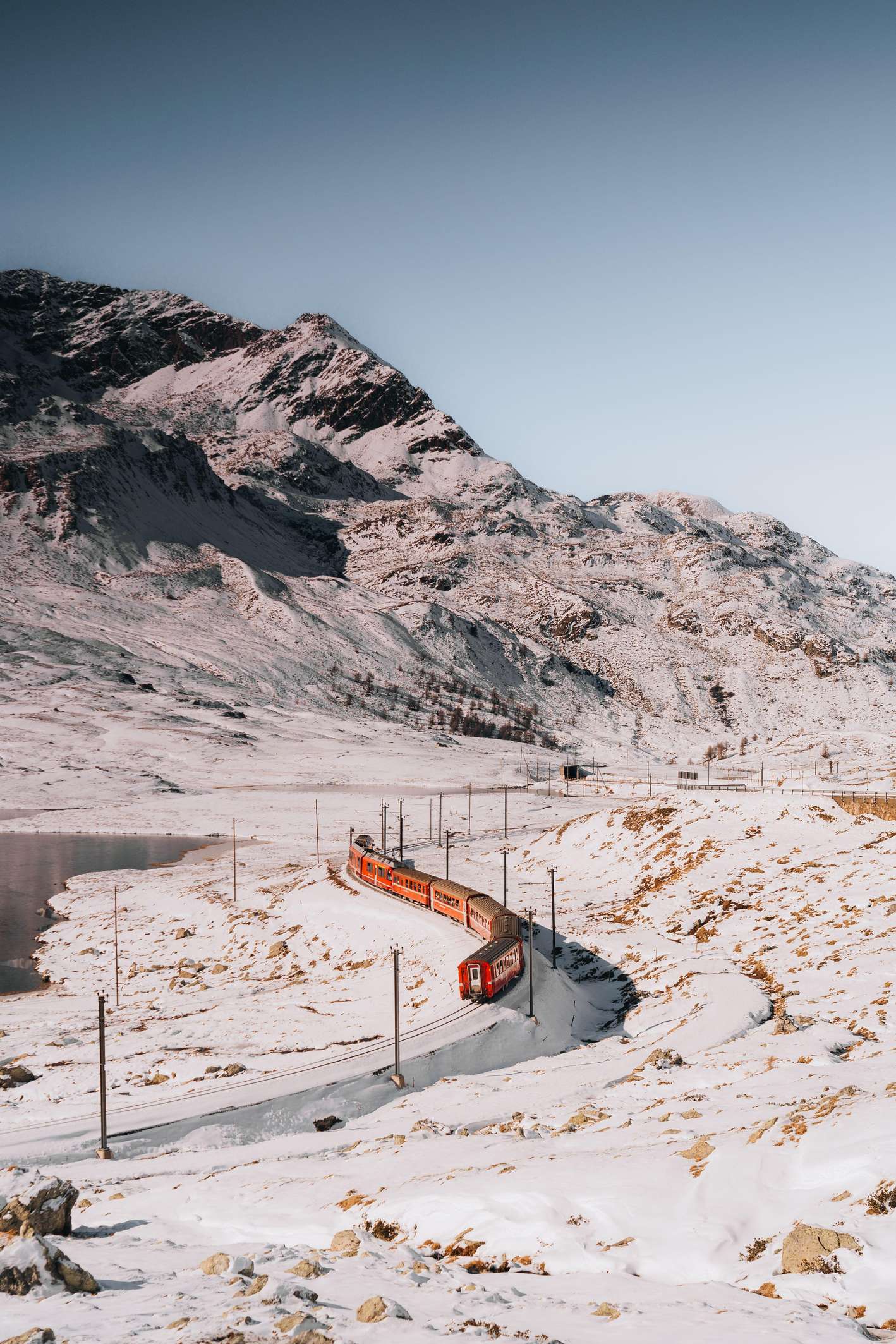
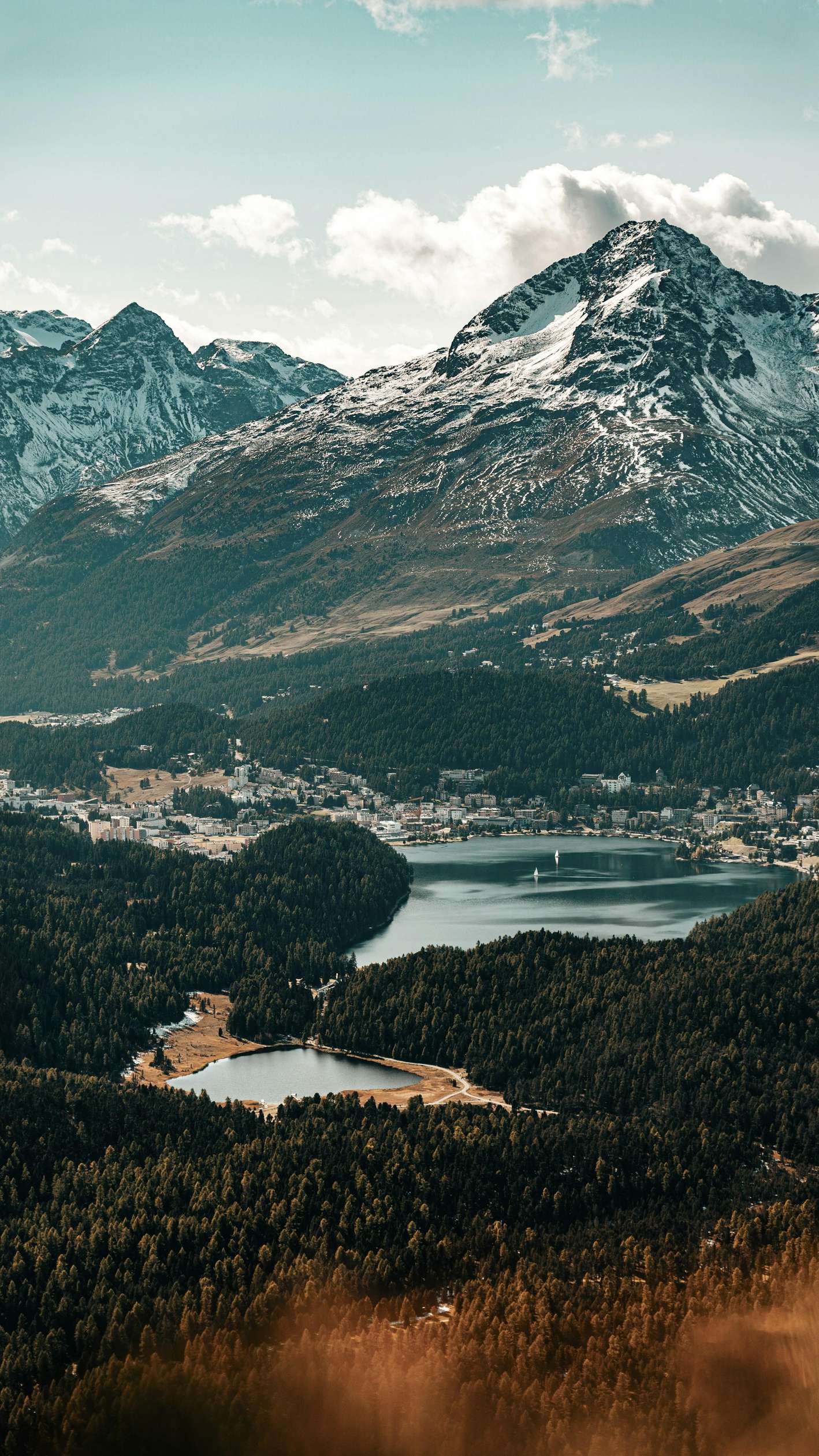
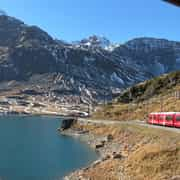
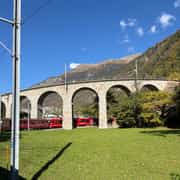
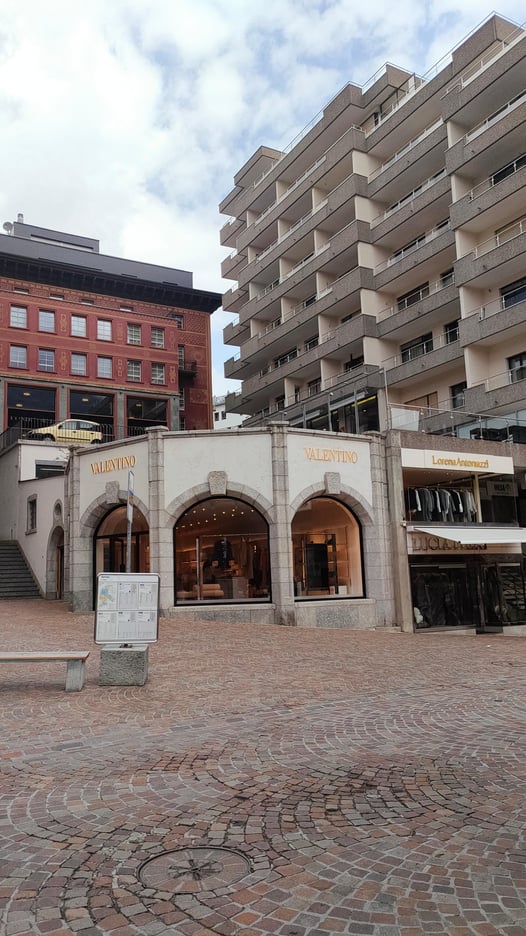
An absolutely incredible day on the Bernina Red Express to St. Moritz!
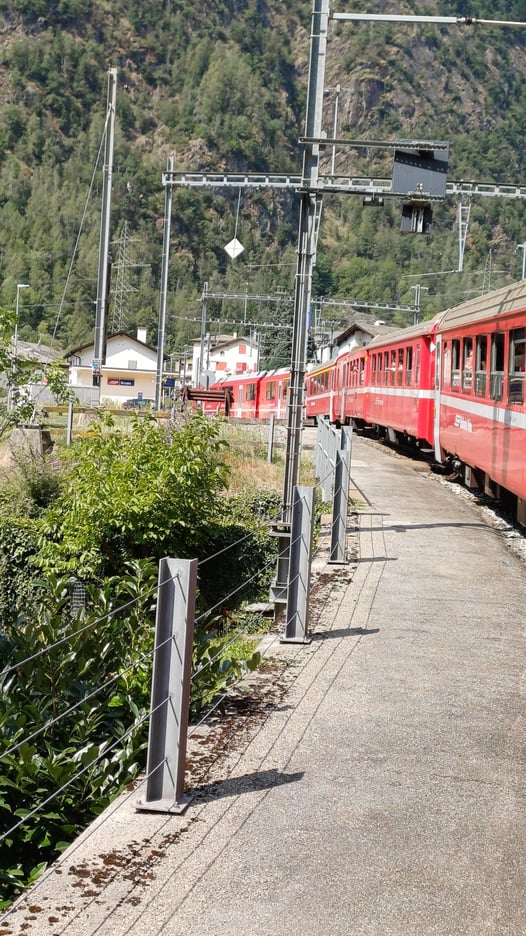
A great day, worth every cent. Unforgettable landscapes, wonderful trip. Maria Cristina, our guide, was a true professional. The return from St.
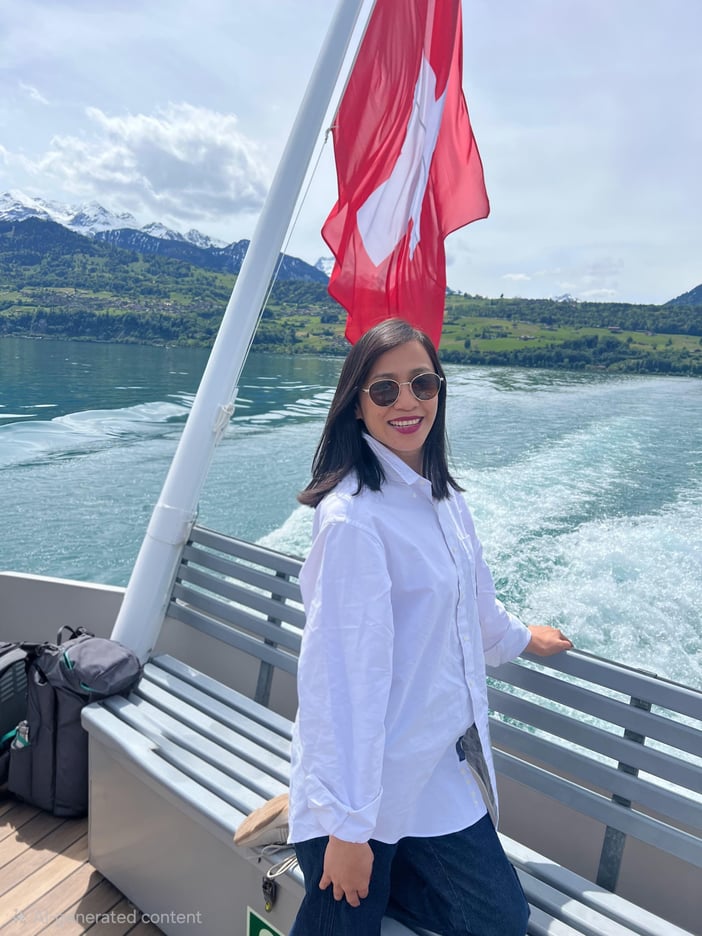
You won't regret going. It's like being inside a screensaver, one of the most beautiful sights ever. Rest up the night before, it's a full day.
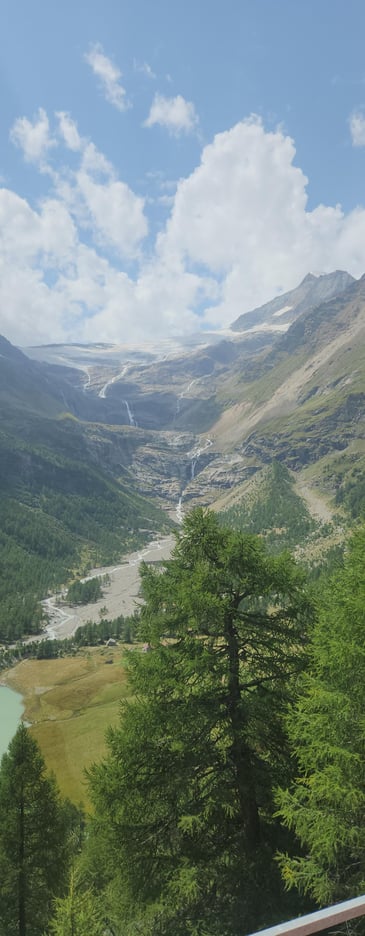
A well-organized trip that made every minute count, an incredible experience worth every cent. Gorgeous pure-nature landscapes, beautiful and relaxing.
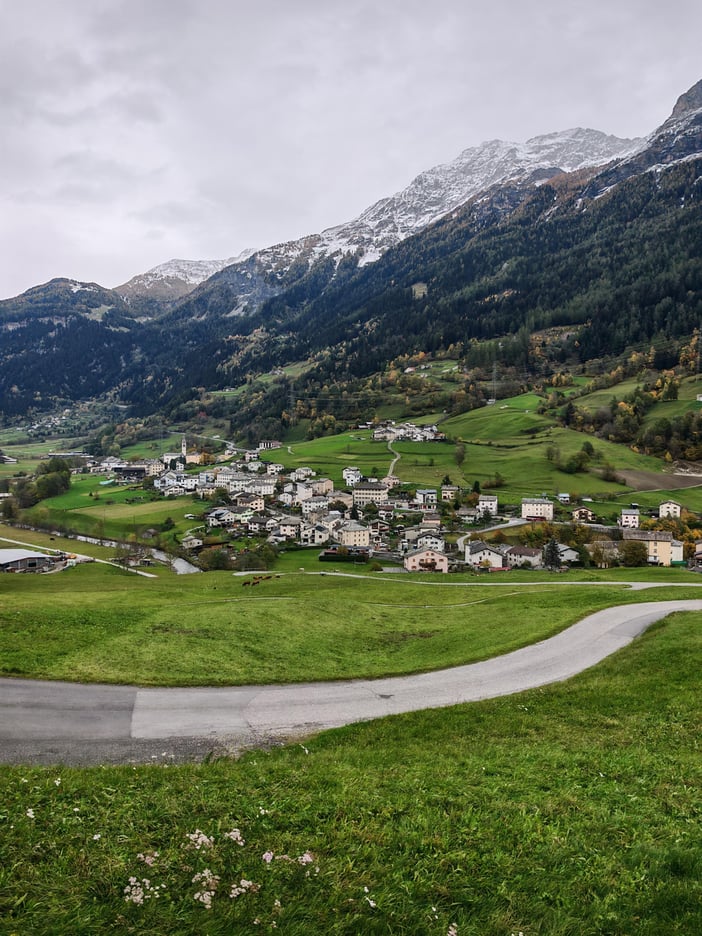
Incredible experience! The train ride from Tirano to St.
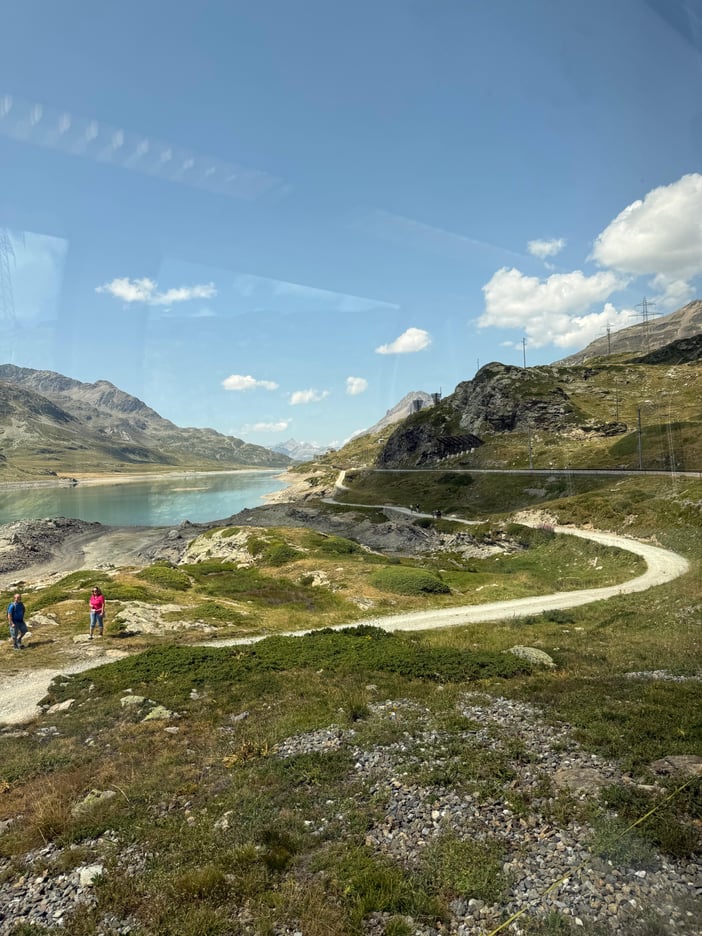
Spectacular views from the train, truly beautiful. Lorenzo was an extraordinary guide, attentive to our needs and full of information. Very comfortable train. St.
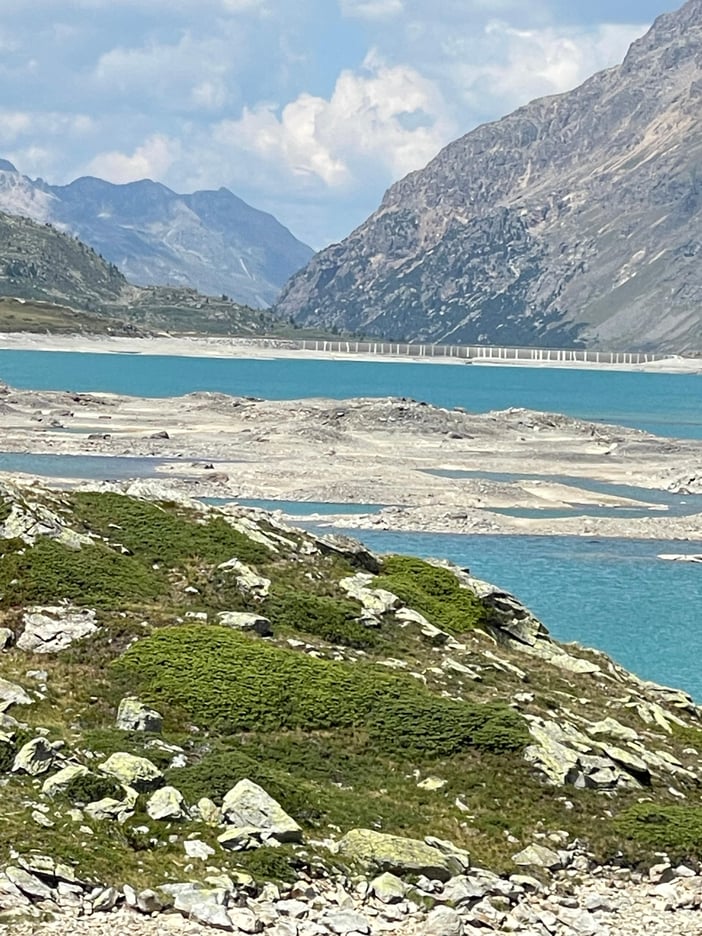
An absolutely incredible day on the Bernina Red Express to St. Moritz! Big thanks to Salvatore, knowledgeable, attentive, welcoming the whole way. Breathtaking, unforgettable Swiss Alps scenery. Highly recommended from Milan!
Most reviewers praise their guide by name for keeping the long day smooth and translating for everyone on board.
Several travelers say the coach ride along Lake Como surprised them with views as good as the train's.
Many reviewers wished they had another hour in St. Moritz, where two hours by the lake goes fast.
Choose a date as soon as you know your Milan plans. Tours run all year, but panoramic seats on the scenic trains sell out one to two months ahead for July and August, and several weeks ahead for the winter holidays.
Read the options carefully, because they change the day. Some tours ride in a standard second-class carriage with windows that open, some guarantee a panoramic carriage, and a few include lunch at Diavolezza instead of free time in St. Moritz.
Confirm the booking and check the cancellation terms before you pay. Tours on this route let you cancel up to 24 hours in advance for a full refund, which is handy weather insurance for a mountain day.
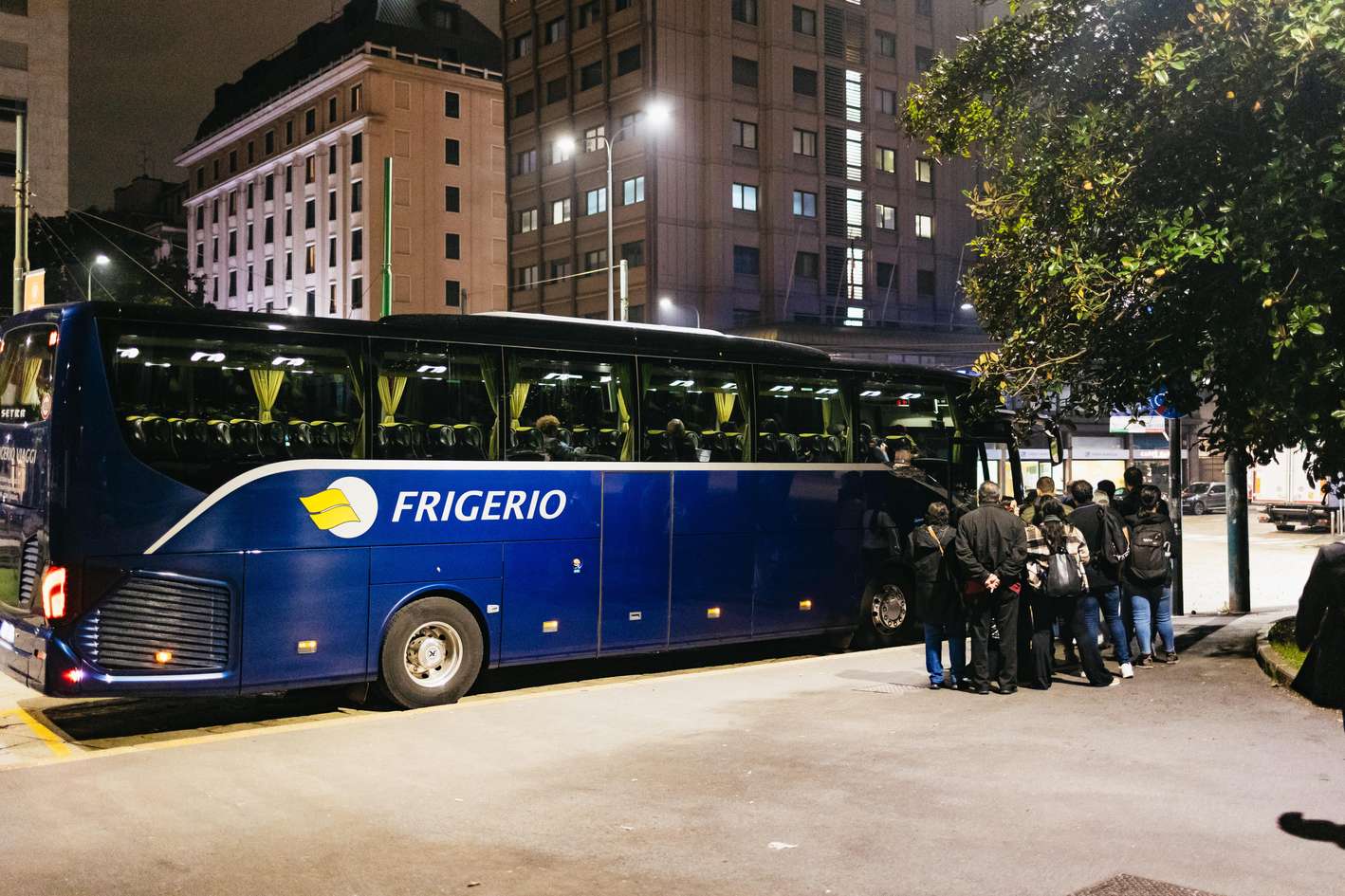
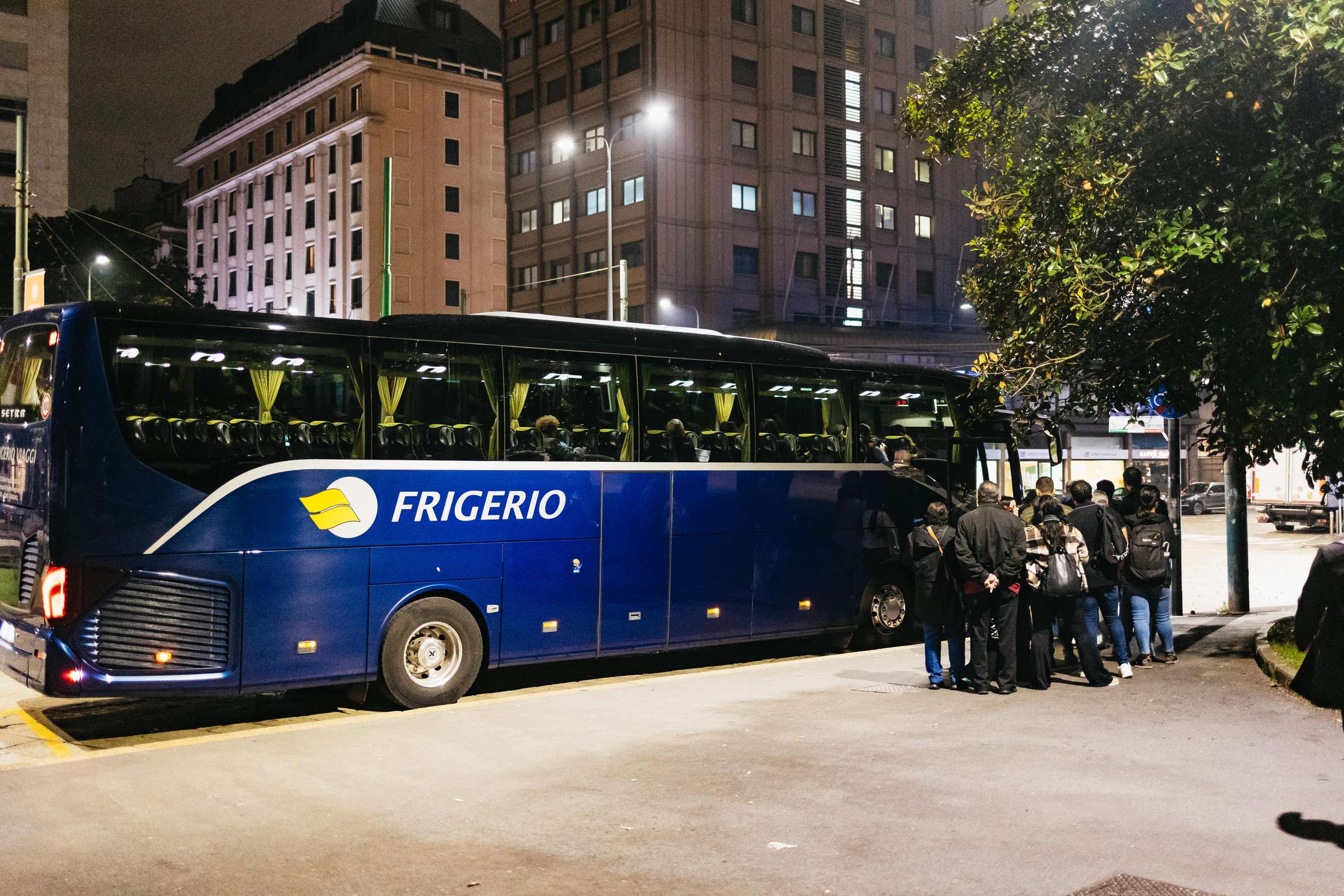
Read your confirmation closely, because coaches leave from several squares: Piazza 4 Novembre by Milano Centrale, Piazza della Repubblica 5 on the corner with Via Turati, or outside Porta Garibaldi station. Tour coaches do not stand with the airport buses, so trust the confirmation, not the crowd.
Departures from Milan run around 7 am, and the round trip takes 11 to 13 hours, returning in the evening. Pack a warm layer and comfortable shoes, since the pass sits over 2,000 meters and can be far colder than Milan.
Milan sits about 191 km from the high Engadin, and the road trip alone takes around two and a half hours without traffic.
By public train, the same journey runs five to five and a half hours each way: a Trenord regional train from Milano Centrale to Tirano, then a change across the square to the Bernina line.
No direct train reaches the alpine resorts. St. Moritz, Interlaken and Zermatt all ask for at least one transfer, and a full round trip by rail takes 12 to 14 hours door to door.
The direction you pick matters too: high-speed lines through the Gotthard and Simplon run long base tunnels, so the views come from the dedicated scenic routes instead.
That is why most visitors choose a coach and train tour. It covers one way by scenic rail and the return by coach along Lake Como, so you never repeat the same scenery and never chase a connection.
Break time (15 minutes)
Visit, Free time, Walk (45 minutes)
Visit, Guided tour, Sightseeing, Scenic views on the way (2.5 hours)
Guided tour, Free time, Shopping, Walk (1.5 hours)
Sightseeing, Bus tour, Pass by, Scenic views on the way
Fidenza Village Kiosk, Shopping Express
Free time, Walk (2.5 hours)
Sightseeing, Scenic views on the way (2 hours)
Pass by
Pass by
Pass by
Break time, Pass by (10 minutes)
Fidenza Village Kiosk, Shopping Express
Autostradale Bus Stop - Lake Como and Bernina Tours
Autostradale Bus Stop - Lake Como and Bernina Tours
Sightseeing, Scenic views on the way (2 hours)
Pass by, Scenic views on the way
Pass by, Scenic views on the way
Pass by, Scenic views on the way
Visit, Free time, Shopping, Walk (1.5 hours)
Autostradale Bus Stop - Lake Como and Bernina Tours
Scenic drive, Scenic views on the way
Autostradale Bus Stop - Lake Como and Bernina Tours
A valid passport or ID card is required at the Swiss border, and travelers from outside the EU must carry a passport issued within the last 10 years and valid for at least three months beyond departure.
Check your passport details before booking, and bring your passport or ID card on the day itself, since checks can happen while the train is still moving or at the station. A Schengen visa covers entry to Switzerland, so carry the visa together with your travel document.
Tirano wakes up to coffee and the smell of the first red train warming on the platform. The question that got you to this square is which way to reach it from Milan.
Three ways make the trip in a day. A guided tour gets you to the Alps fastest: about 2 hours 30 minutes of coach each way, paired with the Bernina train ride.
Driving yourself takes roughly 2 hours 35 minutes to 3 hours 15 minutes over around 174 km, following Lake Como up the SS36 and crossing at the Maloja Pass. Public train takes about 5 hours each way: a 2-hour-30-minute Trenord regional to Tirano, then 2 hours 30 minutes more across the pass.
The tour wins on time because the coach handles the Italian leg. The independent train trades speed for scenery, with all five hours of the ride spent above the lakes. Everything that follows decides between those two.
The departures board at Milano Centrale gives the honest answer. No mountain resort is reachable without a change: St. Moritz, Zermatt and Interlaken all need at least one transfer. The direct trains from Milan, the EuroCity services, go to cities such as Lucerne, Zurich, Basel and Geneva instead.
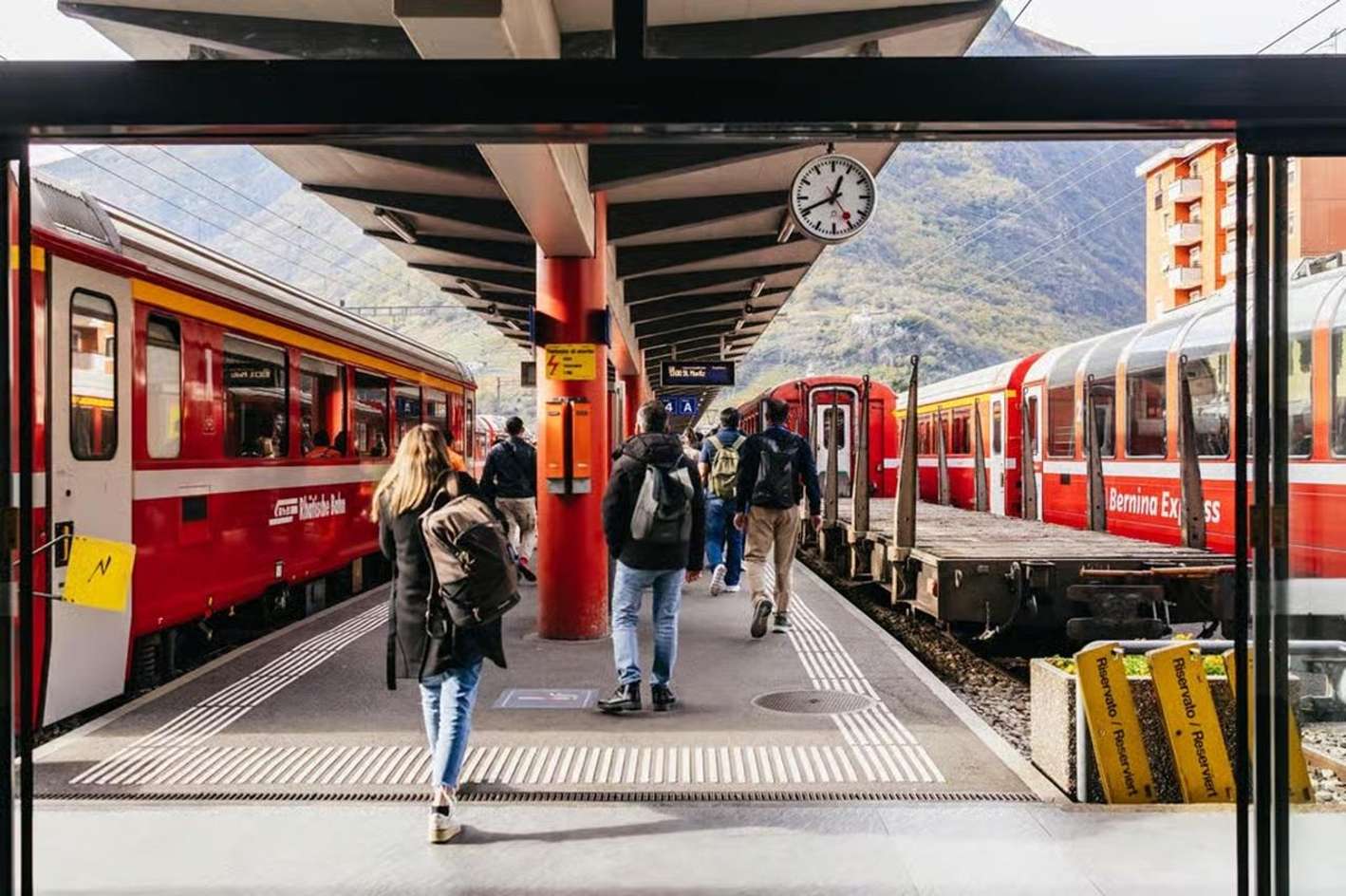
The St. Moritz change is the friendliest in the Alps. At Tirano you step off the Trenord regional, cross Piazza delle Stazioni, and the Rhaetian Railway building sits to your left across the square, a walk of a few metres between two separate stations.
Independent travelers should keep a buffer of 30 to 60 minutes for the connection.
Brig is the tight one. The EuroCity from Milan arrives at Brig Bahnhofplatz and the Matterhorn Gotthard Bahn leaves from a 10-to-20-minute window, which works when the timetable cooperates and stings when it does not.
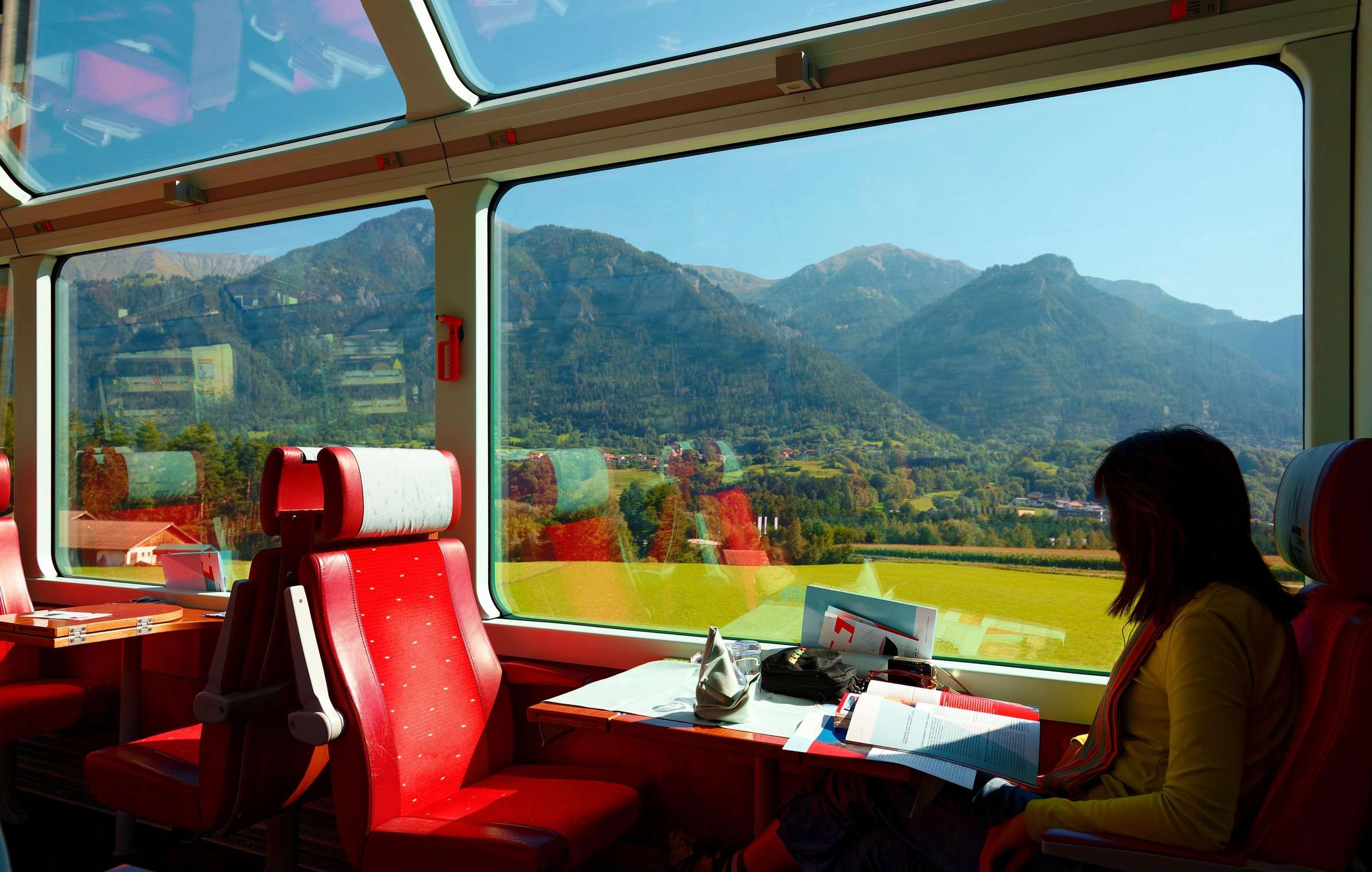
Four lines run out of Milan toward the mountains, and they are not really competing on the same terms. The Bernina route via Tirano takes 12 to 14 hours door to door but crosses the Alps over the pass.
The Zermatt route via Brig needs 7 to 8 hours of train time round trip; leaving Milan between 7 am and 8 am puts you in Zermatt around 10:30 to 11:30 with roughly 4 hours on the ground.
Interlaken and Grindelwald via Spiez cost about 8 hours round trip and leave 4 to 6 hours in Grindelwald on an early 7:10 am departure. Lucerne sits on the fast Gotthard line, a direct EuroCity with no change, and that is the problem: the 57-kilometre base tunnel buries the high peaks.
| Total day-trip time | Transfers needed | Scenic quality | Time to explore | |
|---|---|---|---|---|
| Guided rail day tour from Milan | not known | not known | not known | not known |
| Bernina via Tirano | 12-14 hours door to door | not known | UNESCO pass, no summit tunnel | About 3 hours in St. Moritz |
| Zermatt via Brig | 7-8 hours round trip | 1 transfer at Brig | Standard trains, no scenic railway | About 4 hours in Zermatt |
| Interlaken and Grindelwald | About 8 hours round trip | not known | Eiger, Mönch, Jungfrau views | 4-6 hours in Grindelwald |
| Lucerne via Gotthard | Direct EuroCity, fast route | No transfer needed | Reduced views, 57-km tunnel | not known |
For a single day, the Bernina line is the only route where the train ride itself is the destination. The others spend hours on ordinary rail to reach a town; here the pass, the glacier and the viaducts come to the window.
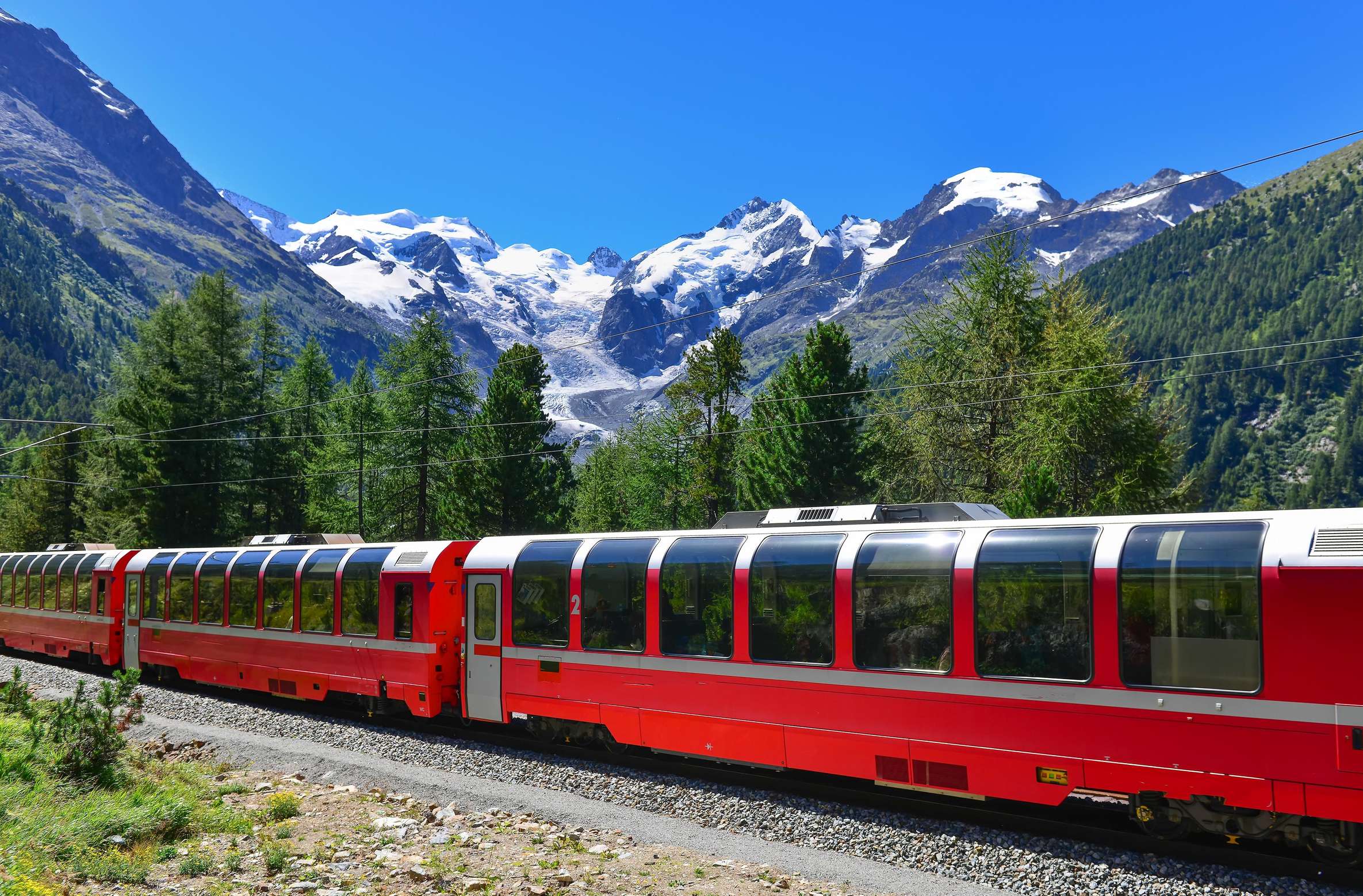
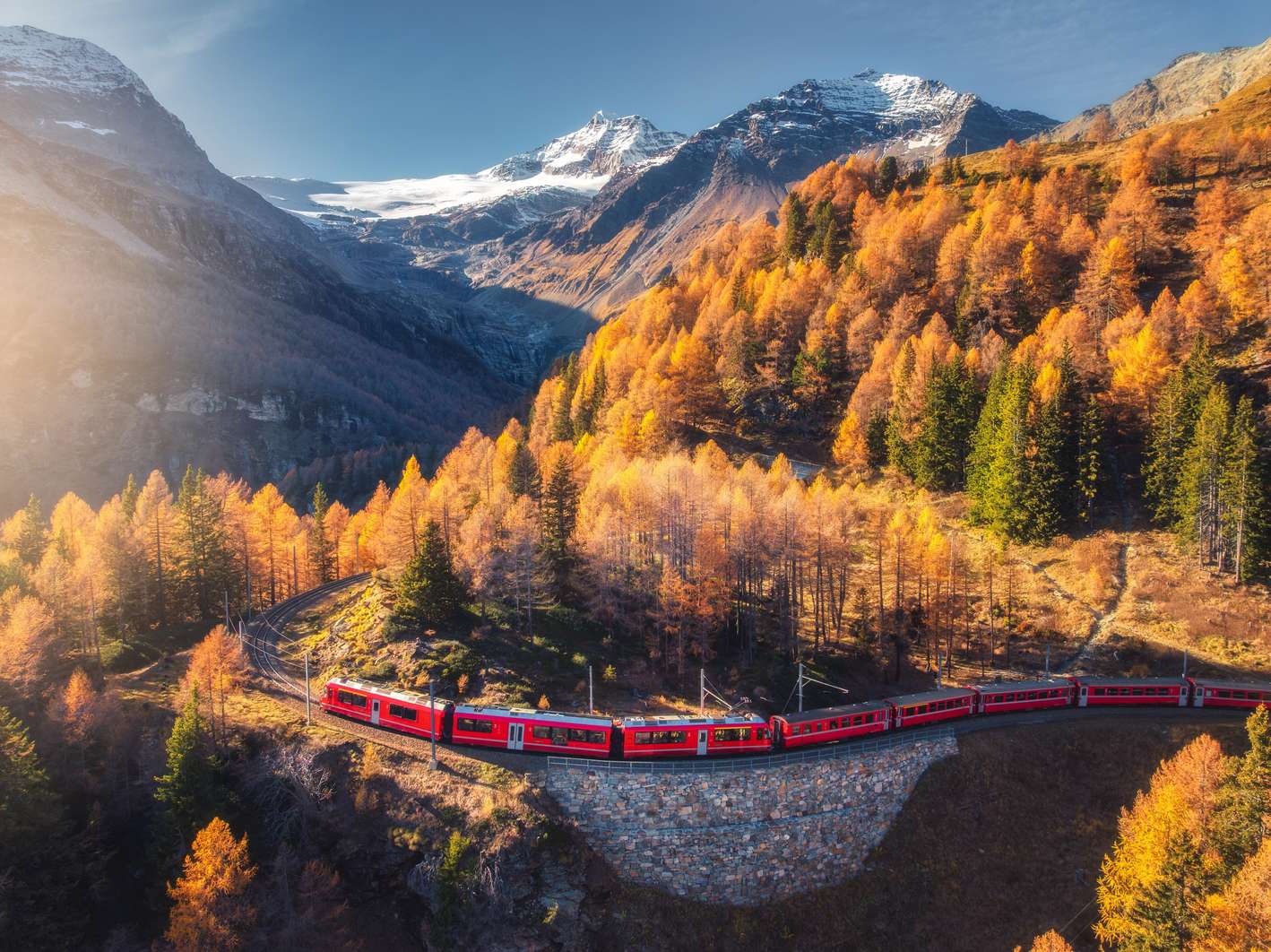
The line leaves Tirano at 429 metres and reaches Ospizio Bernina at 2,253 metres without a cogwheel, holding gradients up to 70 per thousand on adhesion alone. Engineers call it a masterpiece; riders call it the part where nobody looks at their phone.
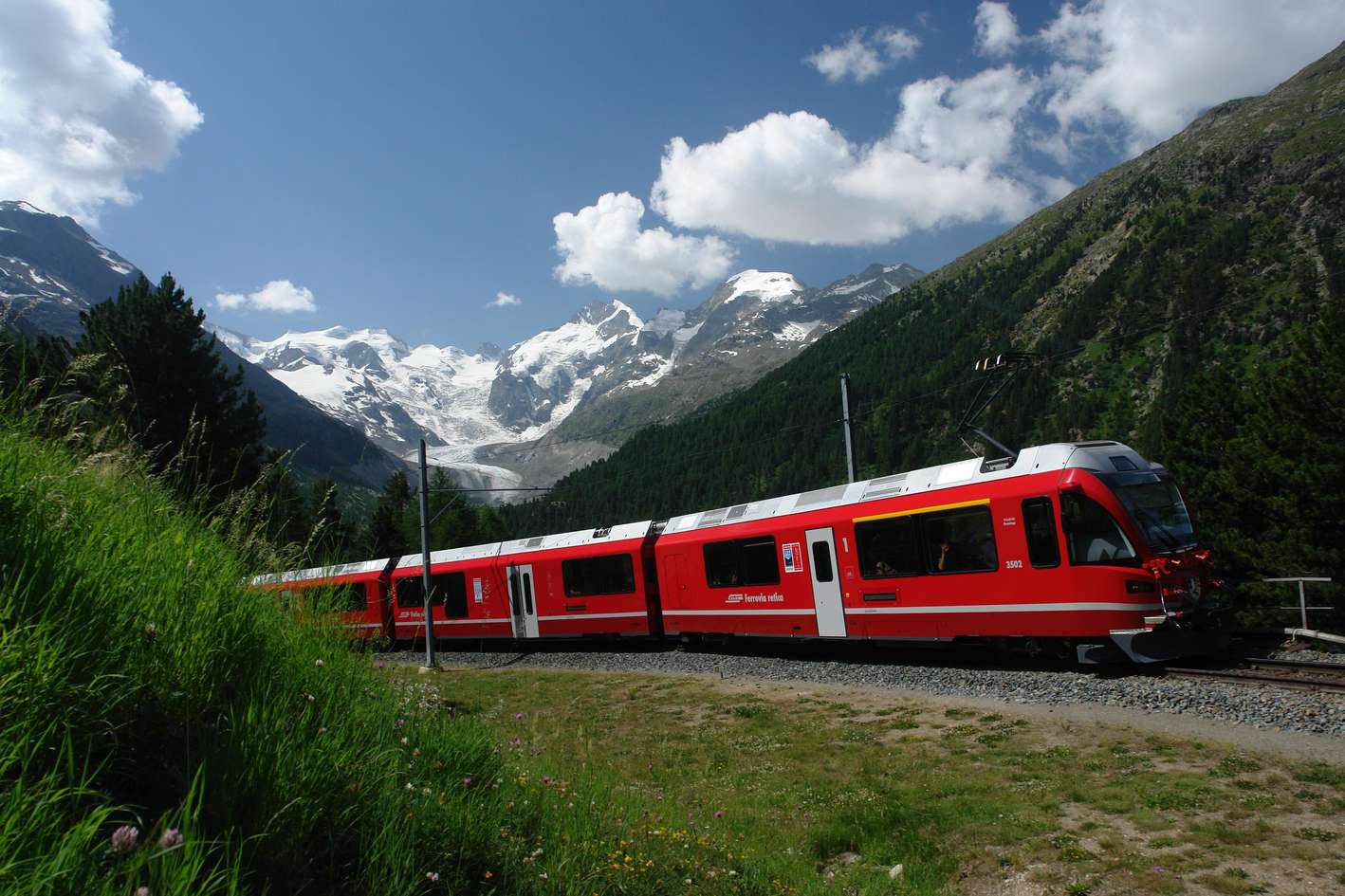
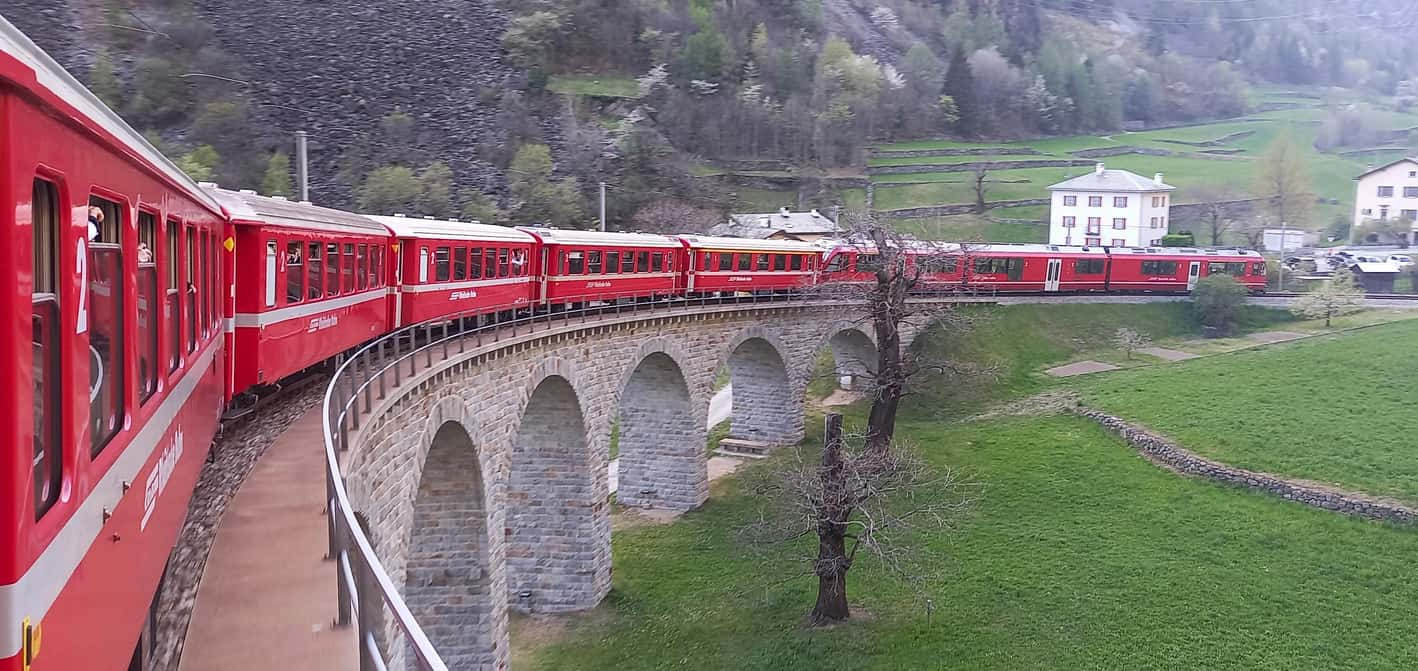
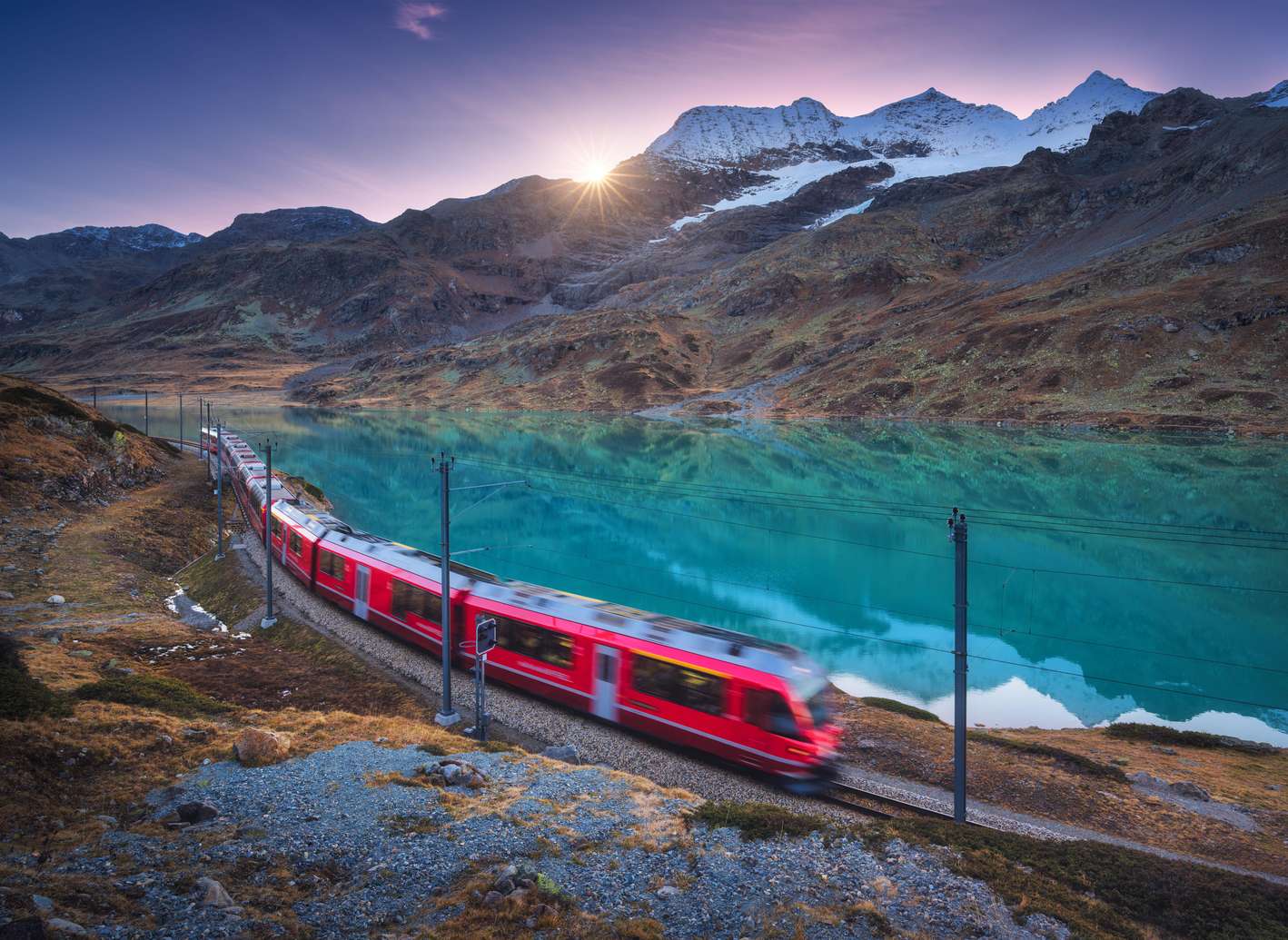
The highlights come in order. First the circular viaduct at Brusio, a double loop 100 metres across that lets the train lose height over a town's roofs. Then Lago Bianco on the high plateau, then the Morteratsch Glacier, then the Montebello curve with the whole Bernina massif in view.
Count the whole route and you pass through 55 tunnels and across 196 bridges through a UNESCO World Heritage site. The Tirano to St. Moritz stretch takes about 2.5 hours.
One tour strings this into a single day: Swiss Alps by Train: Bernina & St. Moritz from Milan includes the Bernina regional train ticket, the coach transfer from Piazza della Repubblica, and a multilingual guide on board, with a stop in Tirano itself.
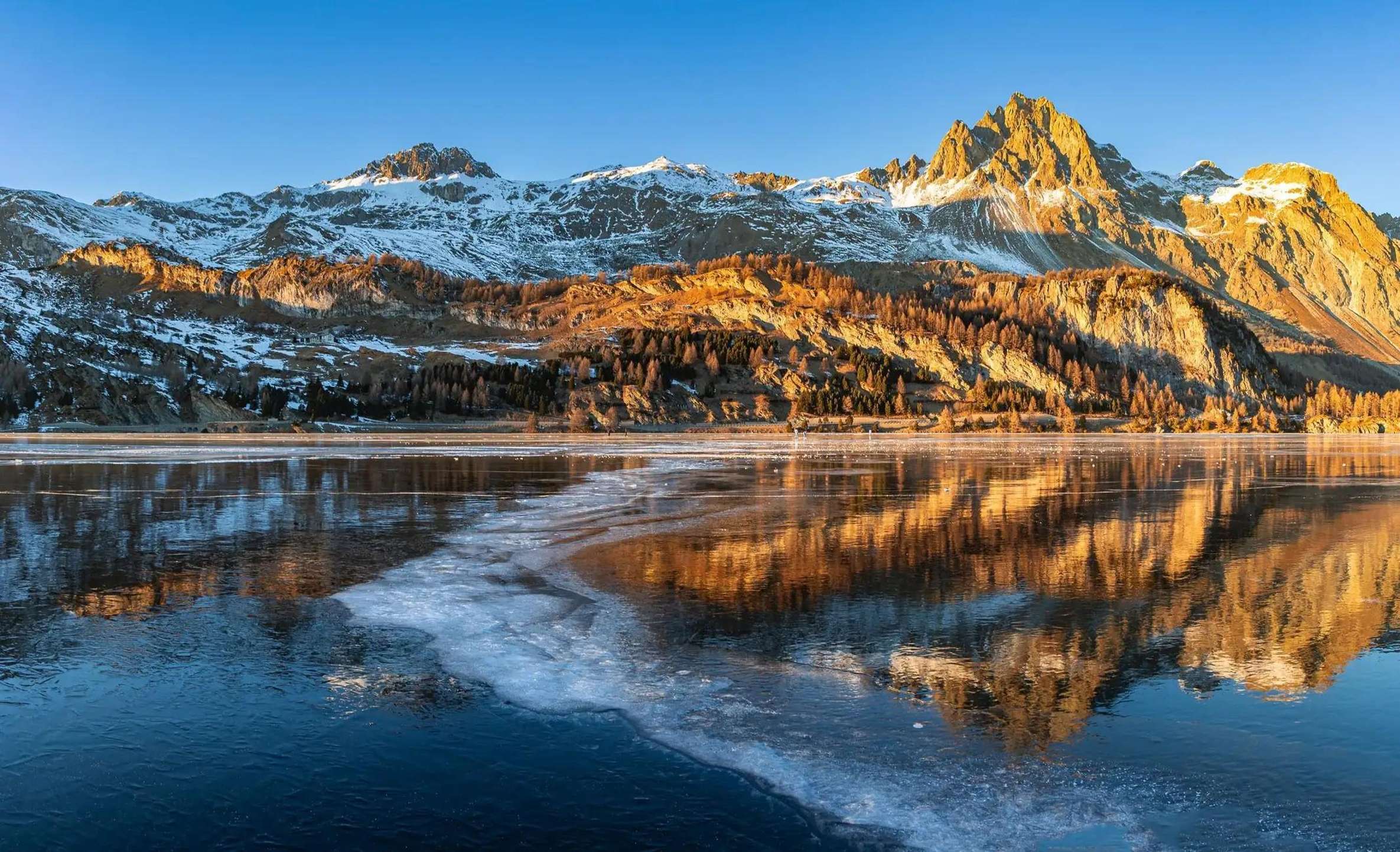
At Tirano the choice splits in two, and both trains run on exactly the same tracks through the same UNESCO site.
The Bernina Express is the white-lettered train with panoramic windows that curve up into the roof. Riding it takes a valid ticket plus a mandatory paid seat reservation, charged for every passenger including children.
It runs on selected connections, offers Wi-Fi and onboard service, and comes with a nostalgic Pullman Class of 1930s coaches limited to 32 passengers.
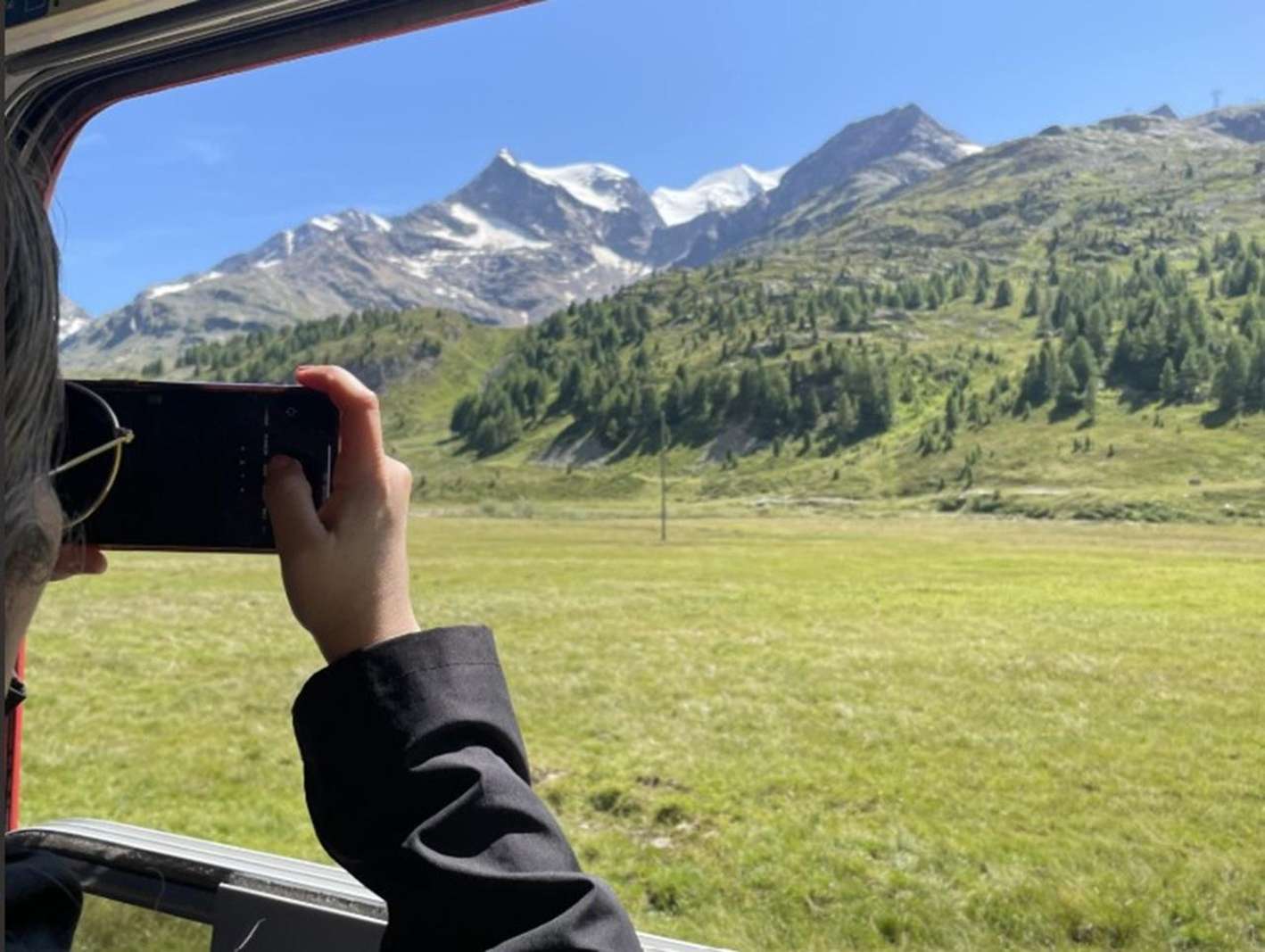
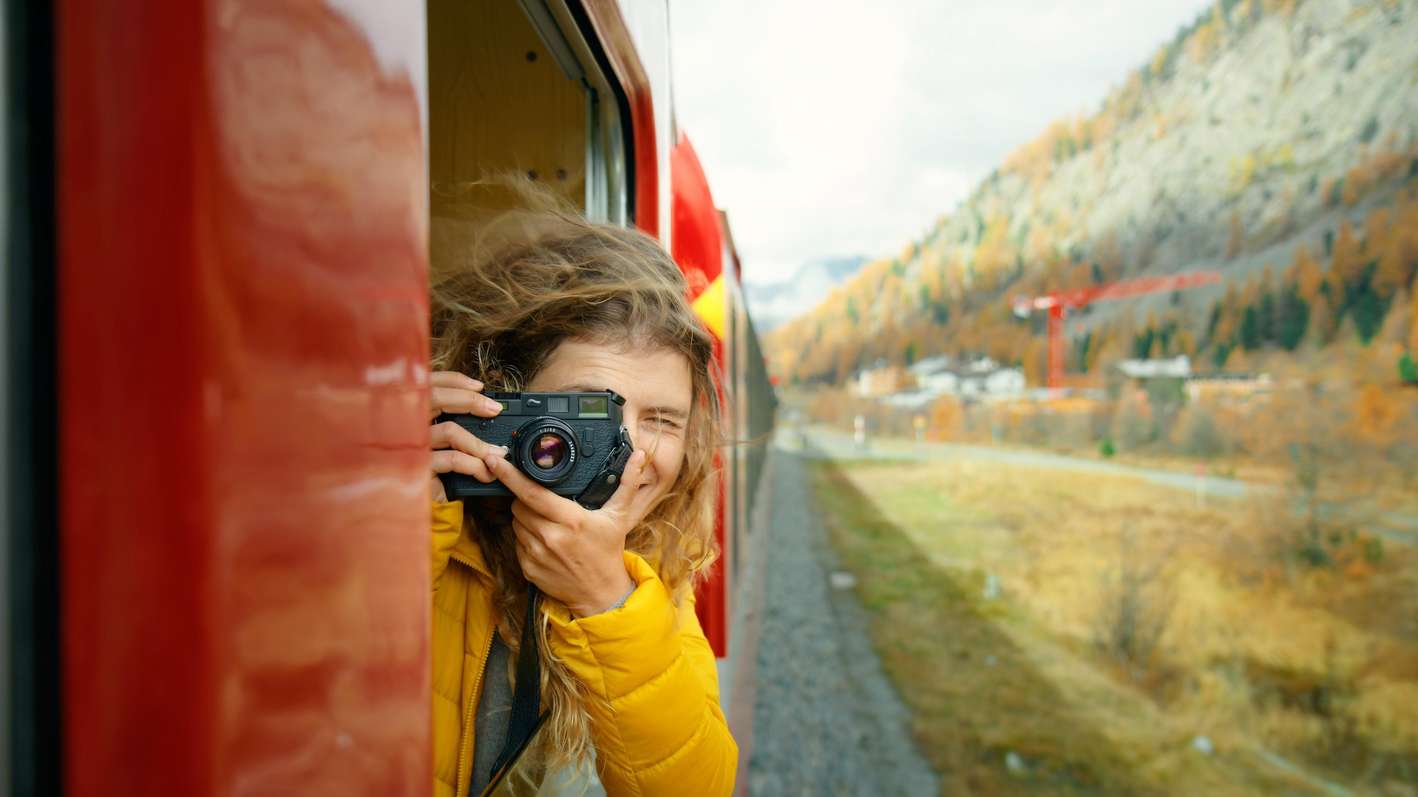
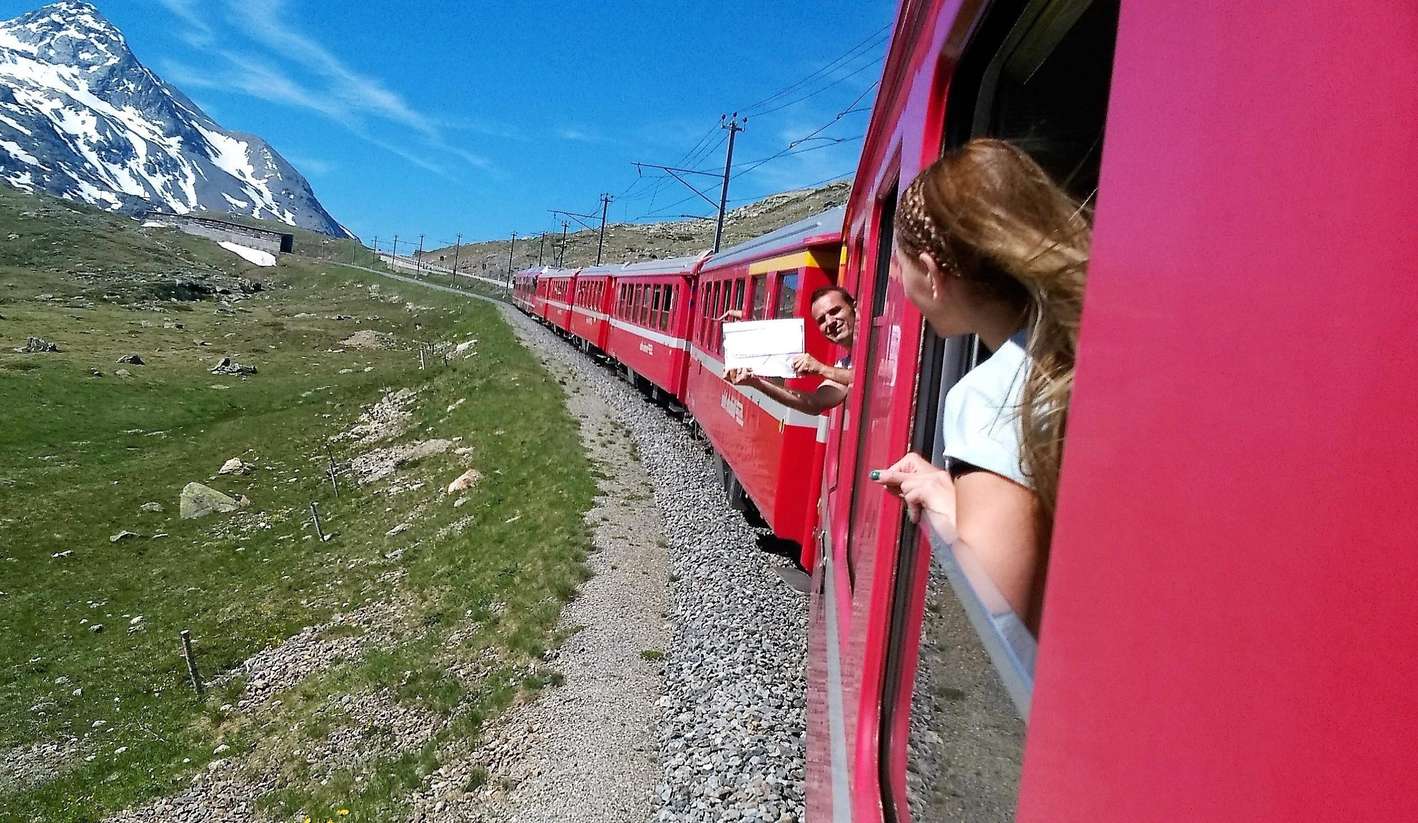
The regional red train, the one most people mean by Trenino Rosso, runs on the regular timetable with more frequent departures. Its second-class coaches have classic windows that open, which is why photographers prefer it: shots without glass glare.
Reservations are optional and only sold on this line, and you can hop off at an intermediate station and catch a later train, something the Express does not allow.
If the photo matters more than the badge, take the regional train. The tour above sells both carriage types as separate options.
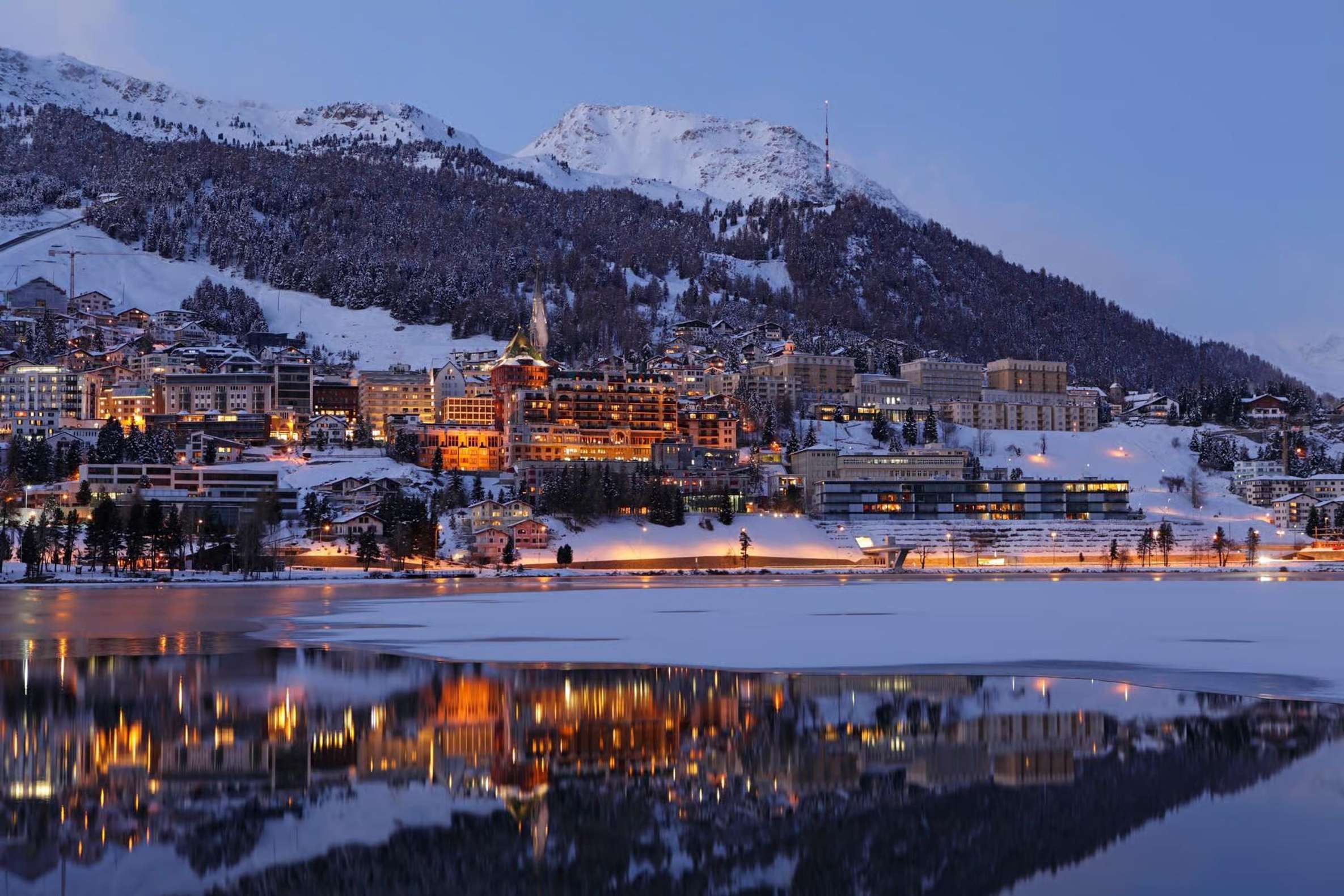
Booking is where independent plans most often stumble, because Trenord and the Rhaetian Railway issue no single combined ticket.
Buy the Milan to Tirano leg through the Trenord app, the station or an authorised retailer, and the Swiss leg separately through the Rhaetian Railway or Swiss Federal Railways. Fares beyond Tirano are charged in Swiss francs.
Skip the passes. Neither the Swiss Travel Pass nor the Eurail Pass sells a single day; the minimum is 3 or 4 travel days, the Swiss Travel Pass does not even cover the Italian stretch, and point-to-point tickets win by a distance on a one-day trip.
Know the refund rules before you pay. Standard international tickets can be changed or refunded before departure with a 20 percent deduction, and not at all after. Panoramic seat reservations on the scenic trains cannot be changed or cancelled at all.
The three booking rules come down to this: separate legs, an added reservation for the panoramic car, and no non-refundable fares on a day trip you might move.
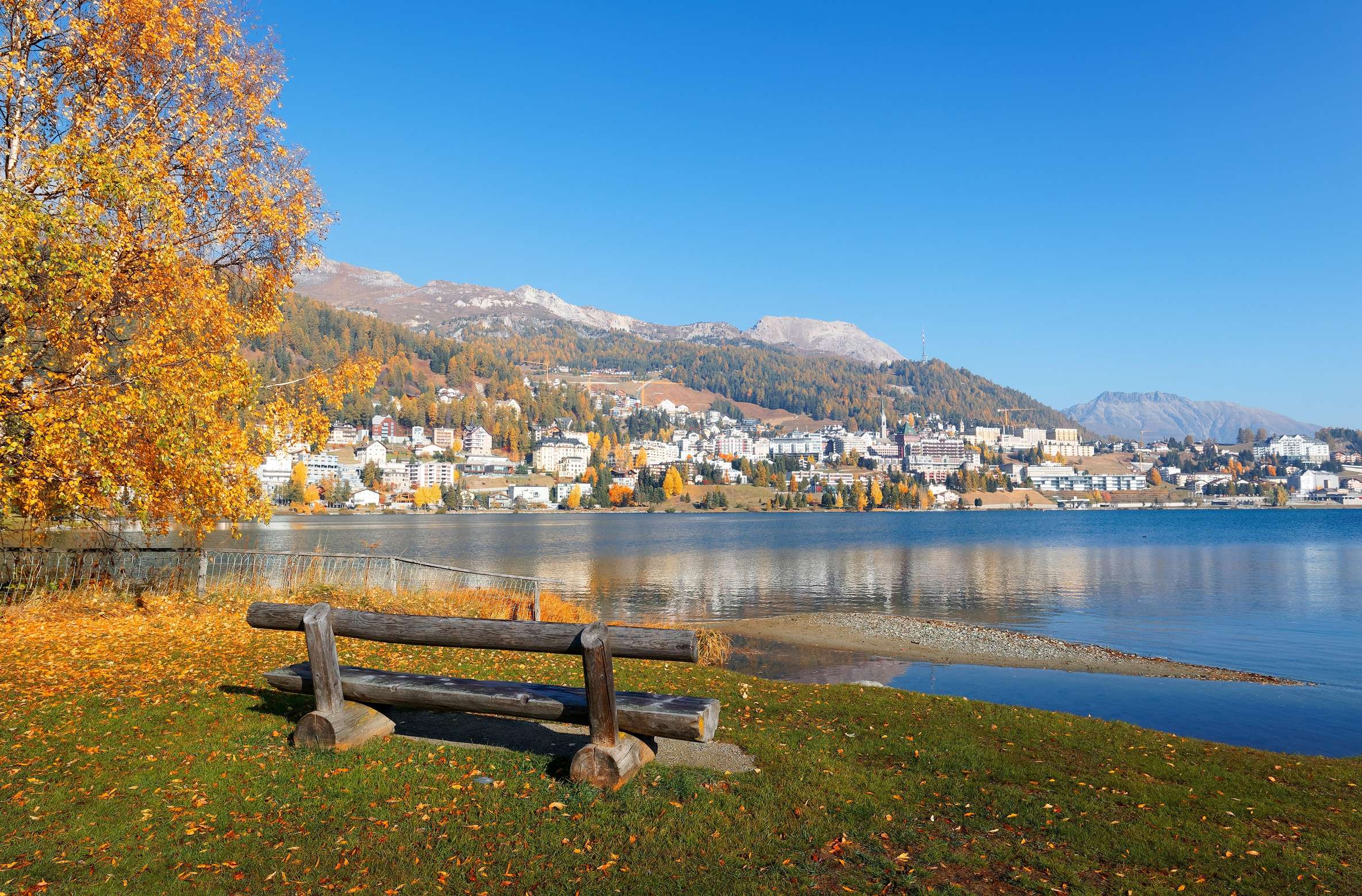
The 8:20 am regional train out of Milano Centrale reaches St. Moritz at 1:11 pm, and the return connection leaves at 4:48 pm. That gives the independent traveler roughly 3.5 hours for the lake promenade and the town centre, the best block of mountain time a one-day itinerary can buy.
Guided tours trade some of it for convenience. Most give 1 to 1.5 hours in St. Moritz, the more generous operators 2 to 2.5, and a traffic delay can shrink the stop to about an hour.
The day works only if the departure is early enough: coaches leave around 7 am, and independent rail departures between 6:20 am and 7:20 am, to beat the winter sun, which sets as early as 4:36 pm in December.
coaches leave around 7 am, independent rail between 6:20 am and 7:20 am
the Bernina train boards across the station square
about 2.5 hours of scenery to St. Moritz
roughly 3 hours independent, 1 to 2.5 on tours
the last sensible train for the evening leg back
In June the evening return still rides in daylight; in January the last hours of the journey are dark, and any itinerary that pushes the alpine train past 4 pm finishes without mountain scenery at all.
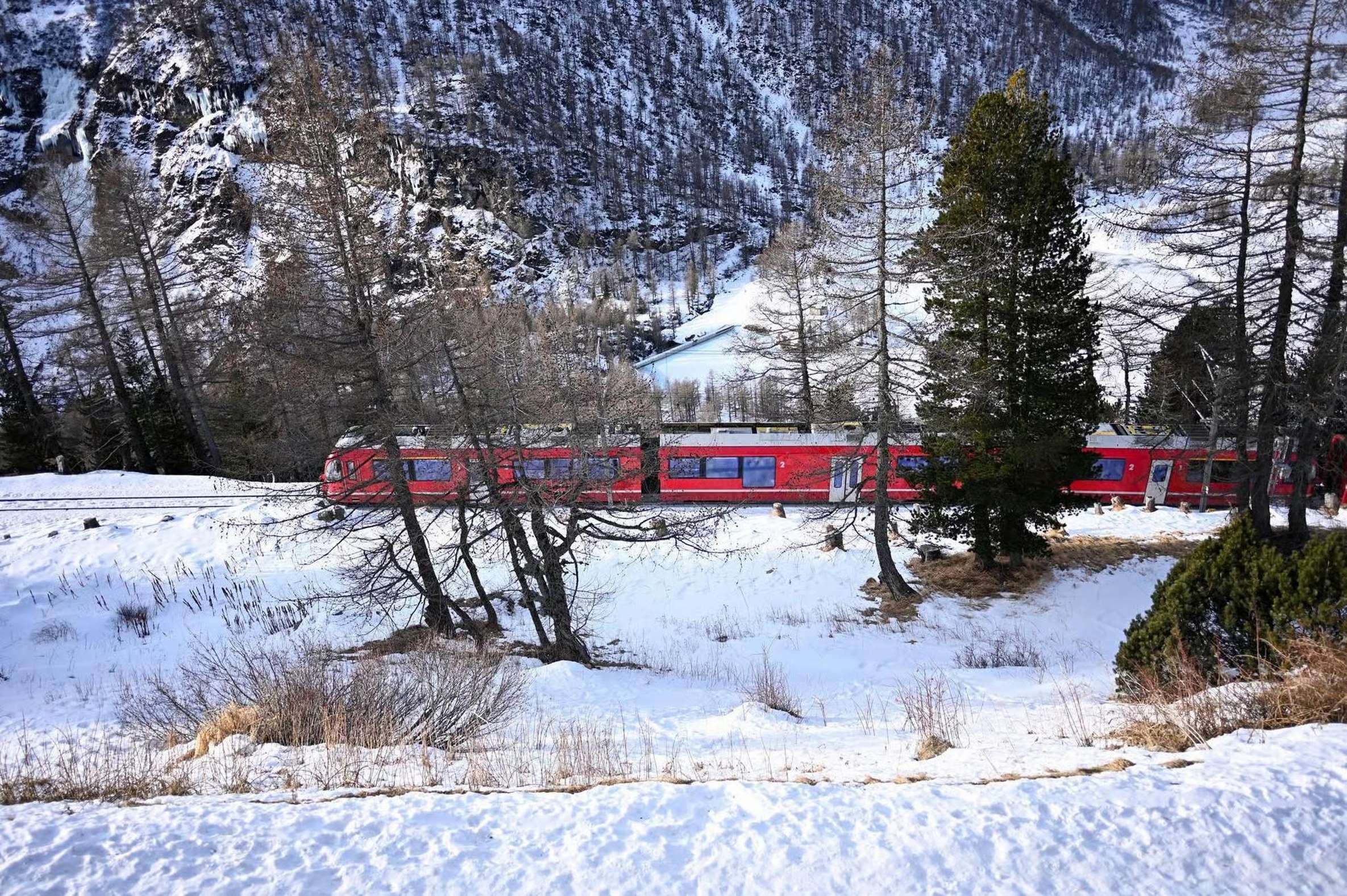
Count the legs and the choice makes itself. An independent round trip means four train connections in one day, two station squares to cross and two ticketing systems.
A guided tour compresses it to three legs, about 7 to 7.5 hours of transit: two coach transfers and one rail journey, with tickets pre-arranged and a guide handling the timing.
Those 7 to 7.5 hours count only moving time; the tour's full 12 to 13 hours also cover free time in St. Moritz and the stops along the way. The return is by coach, so you see the Bernina line once and Lake Como by road on the way back.
From Milan: St. Moritz and Bernina Express Tour runs 12 to 13 hours from Piazza della Repubblica 5, rated 4.9 out of 5 by recent travelers, with about 2.5 hours free in St. Moritz.
| Check | Why it matters | Our pick |
|---|---|---|
| Guaranteed panoramic carriage at booking | without it you take whatever carriage the ticket covers | confirmed when the panoramic option is selected |
| Free time in St. Moritz | most tours give 1 to 1.5 hours | about 2.5 hours on the featured tour |
| Meeting point and arrival time | airport coaches crowd the same squares | Piazza della Repubblica 5, 15 minutes before departure |
The one detail that catches people out is the meeting point. Coaches leave from Milano Centrale, Piazza della Repubblica or Porta Garibaldi depending on the operator. Arrive 15 minutes before departure at Piazza della Repubblica, 20 minutes where an operator asks for it, and check the confirmation for your own meeting point.
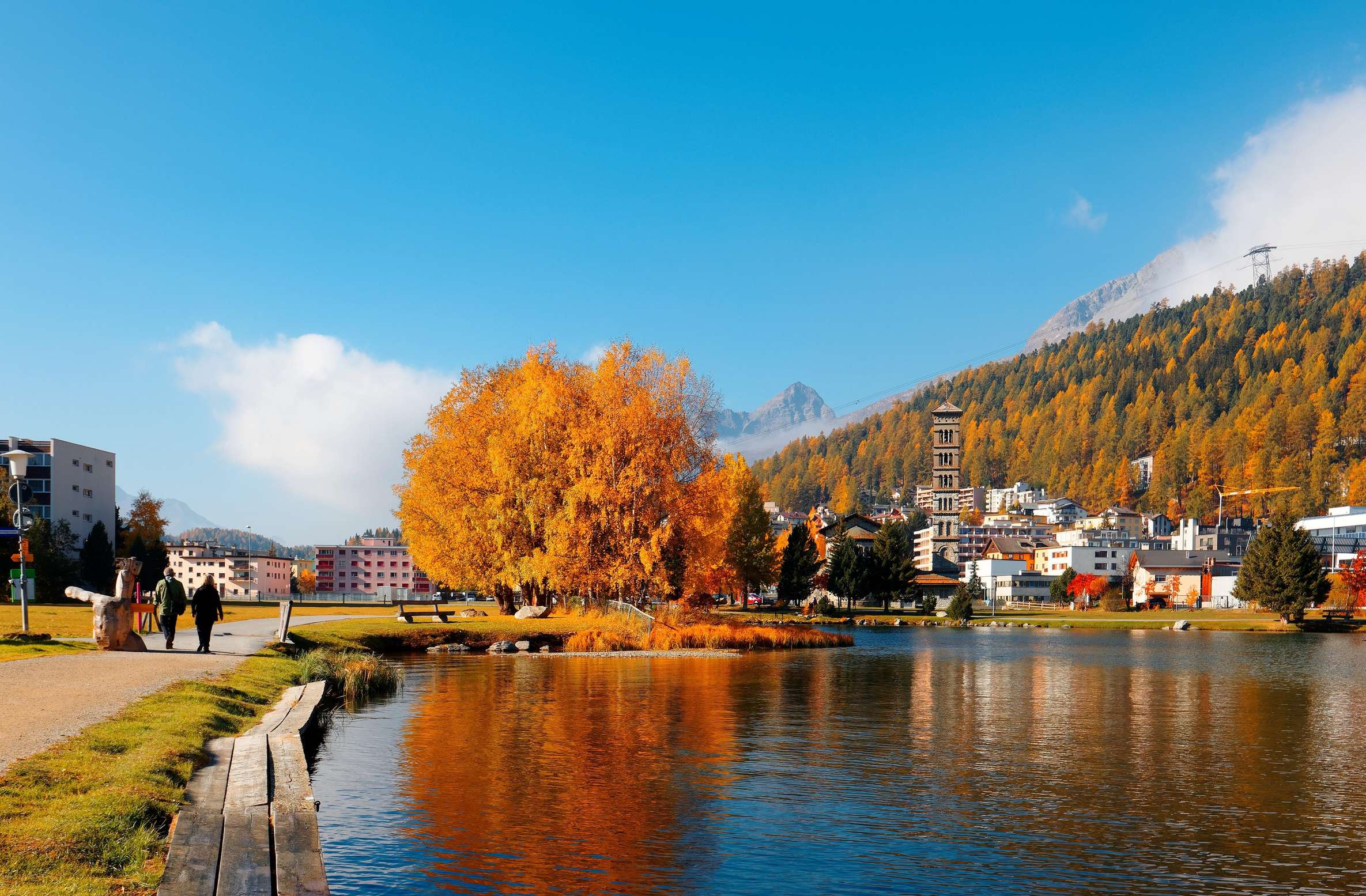
The road version of this trip runs about 170 km in three hours: the SS36 north past Lecco and along Lake Como's eastern shore to Colico, on to Chiavenna, then the border at Castasegna, where customs expect a valid passport or recognised ID.
Beyond the border the Val Bregaglia narrows and the road climbs hairpins to the Maloja Pass at 1,815 metres, open year-round, before flattening out past Sils and Silvaplana into St. Moritz.
Three rules surprise drivers. The Swiss motorway vignette exists only as an annual pass, valid 14 months, though the Maloja road itself needs none.
Between 15 November and 15 April, Italian alpine roads legally require winter tires or snow chains in the car, and signposted Swiss stretches marked Schneeketten obligatorisch demand chains at a 50 km/h limit. And Zermatt is car-free: drive only as far as Täsch, park, and take the 12-minute shuttle in.
Zermatt is car-free drive only as far as Täsch and take the shuttle; unauthorized driving brings large fines 15 November to 15 April Italian alpine roads require winter tires or snow chains in the car Schneeketten obligatorisch signs chains become compulsory, with a 50 km/h limit while fitted
For a car-free resort the fine is the price of not reading the sign; for a winter pass, the chains are the price of the drive at all.
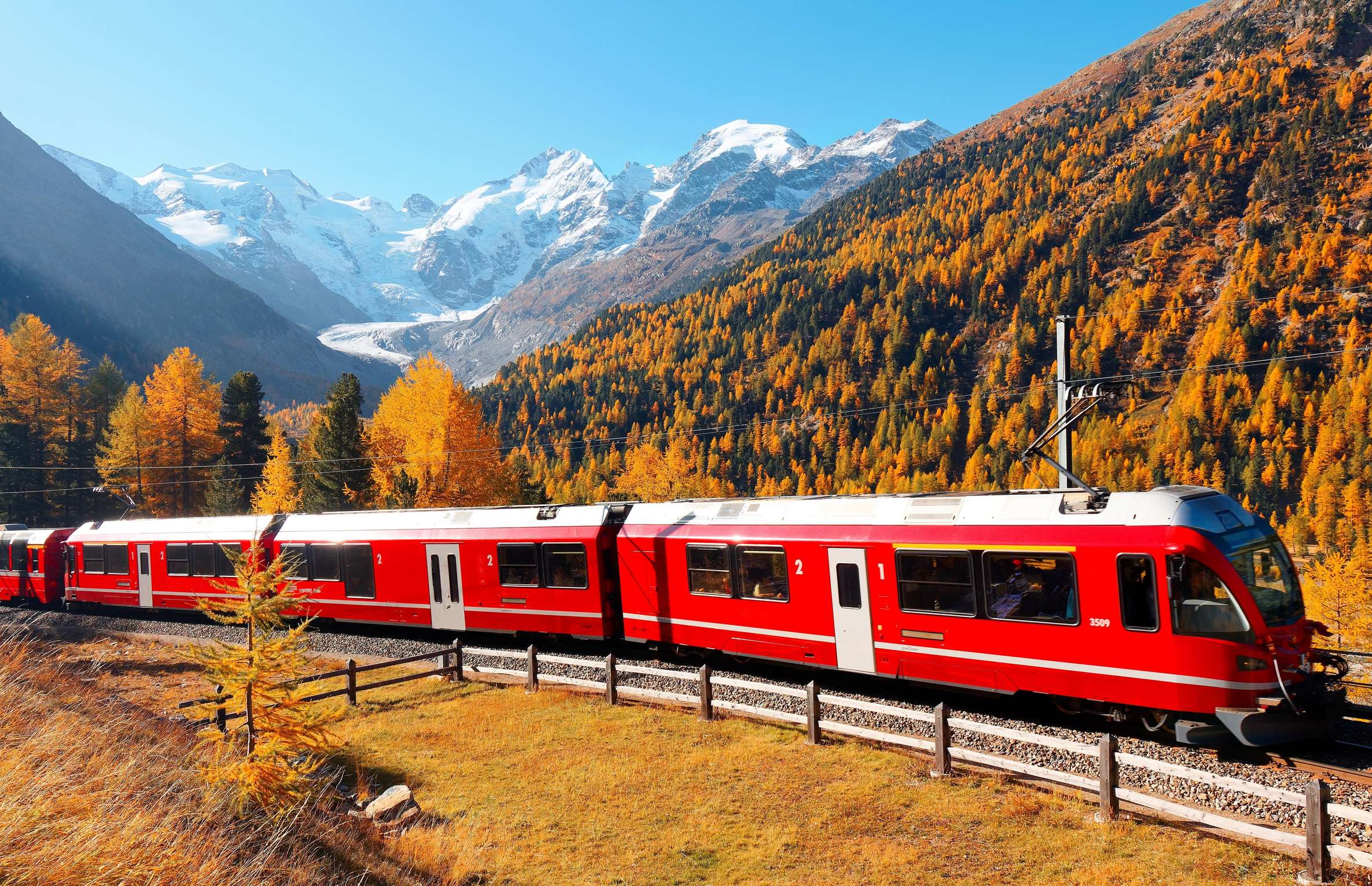
The red train does not stop at St. Moritz unless you make it.
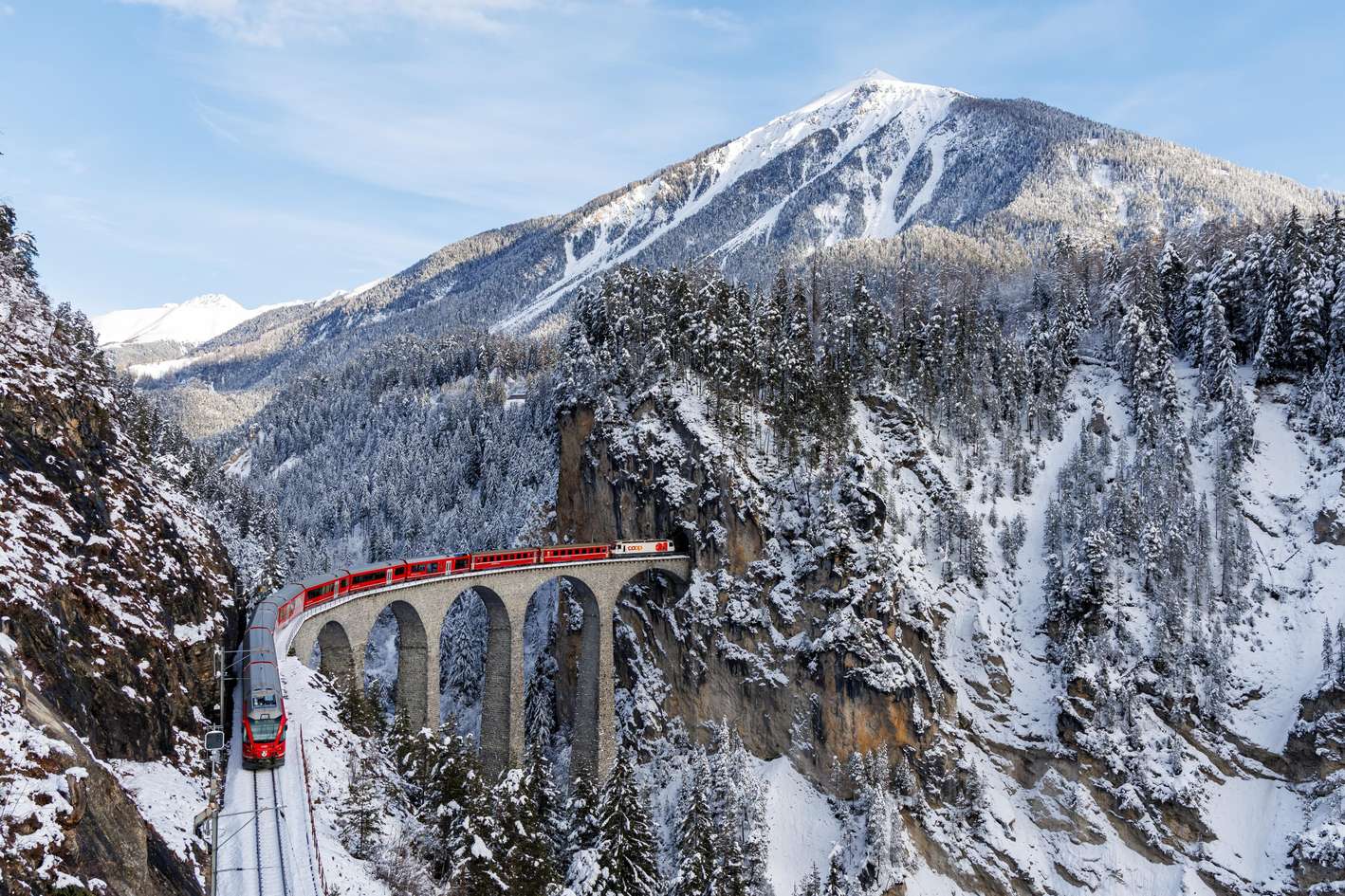
The line continues north to Chur, and past the turnoff the scenery changes character: the 65-metre-high Landwasser Viaduct, the Albula Railway Wonder of spiral tunnels between Muot and Preda, and the 5,864-metre Albula Tunnel, the highest standard-gauge crossing of the Alps at 1,800 metres.
There is no direct Bernina Express service to Zurich; a one-way Milan to Zurich trip via this route takes about 10 hours by regional and connecting trains.
The practical version is breaking at Chur, where direct trains reach Zurich in about 1 hour and 15 minutes, and the station quarter repays an hour's walk between trains.
Chur is a working town, which is its charm on a rail day: museums and galleries within minutes of the platform, and old castles a short drive out if the connection is long.
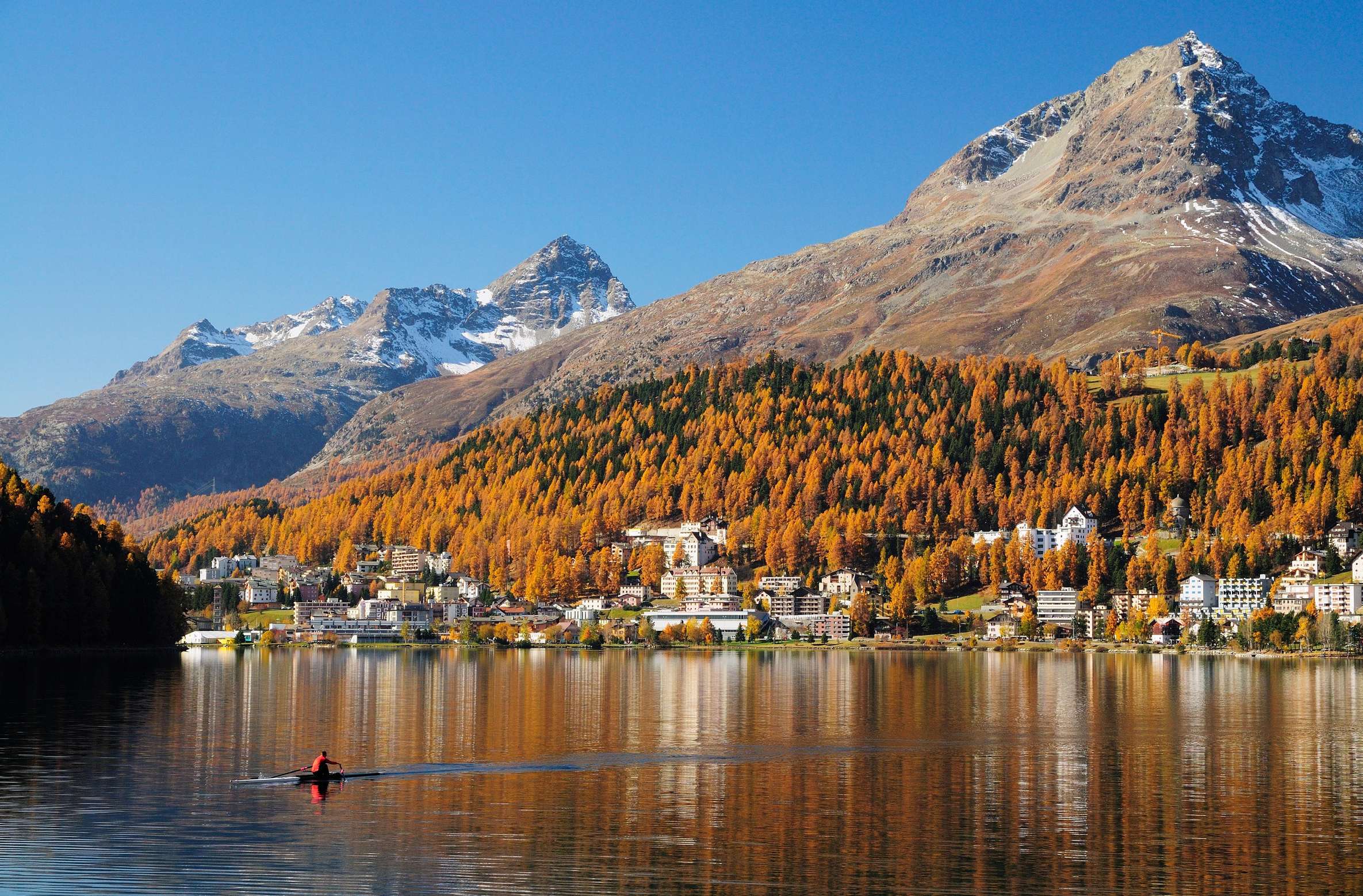
Base yourself on Lake Como and the Bernina line comes to you. Direct Trenord trains leave Varenna-Esino on the eastern shore for Tirano hourly, taking 1 hour 27 minutes, and drop you at the same Piazza delle Stazioni where the red trains wait across the square.
From the town of Como it is a different story: no direct rail, and connections through Monza take 3 hours 11 minutes to 4 hours.
The wider region offers other Swiss days. Lugano is the closest Swiss city to Milan. Direct EuroCity trains reach Zurich in about 3 hours 20 minutes; take the right-hand side for the best lake views, though the Gotthard Base Tunnel swallows roughly twenty minutes of the ride.
Scenery purists route themselves to Lugano, then take the Gotthard Panorama Express over the old mountain line toward Lucerne.
Put side by side, the routes split into two kinds of day: the ones where you ride over the Alps, and the ones where you pass under them.
Pick the month by what you want outside the window. April and May are the balance point: snow still coats the peaks while the valleys turn green, and daylight stretches to between 13.6 and 15 hours.
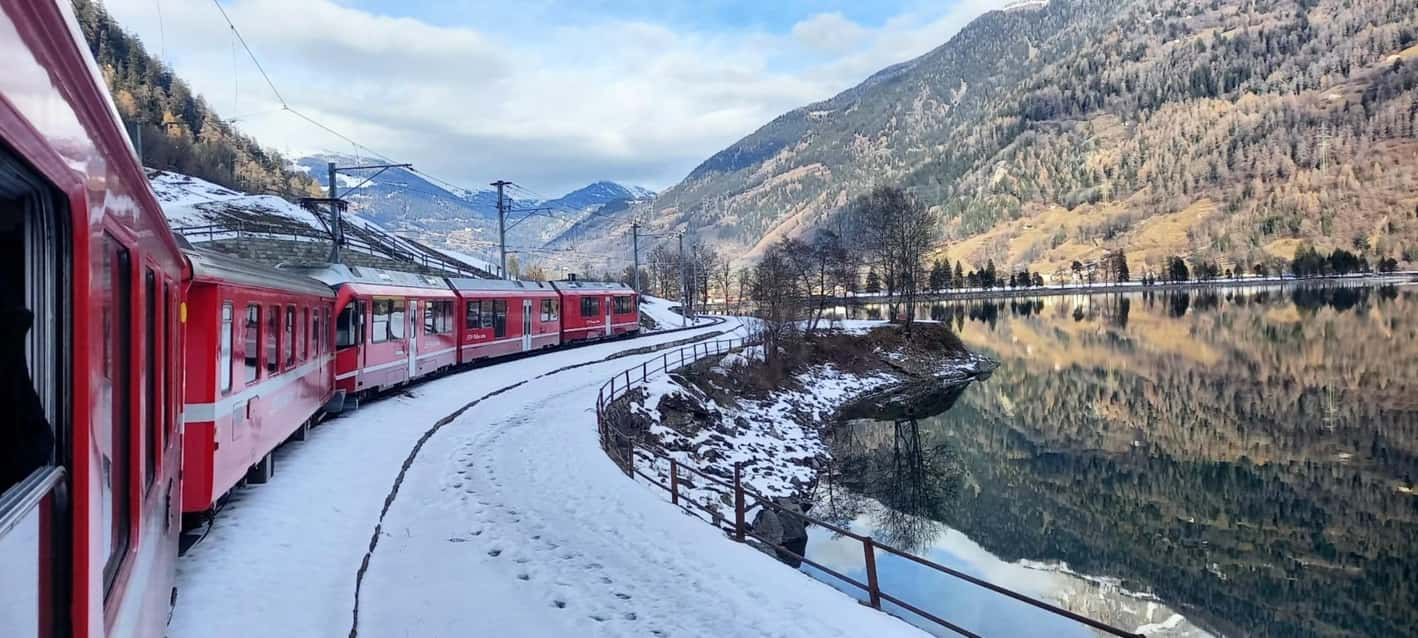
January is the deep-snow show, with around 12 snow days at the pass, Lago Bianco frozen solid and the slopes white from Pontresina to Ospizio Bernina. July brings the wildflowers, rhododendrons blooming above 2,000 metres.
Winter has two catches. Daylight shrinks to between 8.6 and 10.3 hours, so the afternoon return runs toward sunset, and heavy-snow winters disrupt the mountain line with drifts and cornices, closing it for avalanche risk now and then. Tours run all winter and adjust itineraries for safety when they must.
Watch the shoulder seasons too. From mid-April into early June and again from mid-October into early December, cable cars close for maintenance and many shops and restaurants in St. Moritz shut or run short hours.
January is one of the busiest tour months, featuring deep snow and frozen alpine lakes alongside short daylight of 9.1 hours.
Tap a month to read it.
January is one of the busiest tour months, featuring deep snow and frozen alpine lakes alongside short daylight of 9.1 hours.
Tap a month to read it.
August sees increased tour volume with 14.1 hours of daylight and clear panoramic views, with snow limited to high peaks.
Tap a month to read it.
June brings 15.8 hours of daylight and warmer valley temperatures, with snow lingering mostly on high peaks.
Tap a month to read it.
The busiest months are January, February and December, and May and September see the fewest crowds. Whichever month you pick, the hour you leave Milan decides how much you see from the window.
For a single day out of Milan, take the guided tour: the coach handles the slow Italian leg, the tickets and the panoramic seat are arranged for you, and you still ride the full Bernina crossing.
Do it on your own if you are staying on Lake Como near Varenna, or if you have slack in your schedule and want 3.5 hours in St. Moritz instead of two.
No. Mountain resorts like St. Moritz, Zermatt and Interlaken all require at least one train change. Direct trains from Milan do reach Swiss cities such as Lucerne, Zurich, Basel and Geneva.
About 5 to 5.5 hours each way. A Trenord regional train takes roughly 2.5 hours from Milano Centrale to Tirano, then the Bernina railway needs another 2 hours 15 minutes to 2.5 hours to climb to St. Moritz.
They run on the same UNESCO-listed tracks. The Bernina Express has panoramic cars with windows that curve into the roof, and a paid seat reservation is mandatory. The regional Red Train has ordinary second-class carriages whose windows open, which many photographers prefer.
EU and EFTA citizens can use a valid passport or national identity card. Third-country nationals need a travel document issued within the last ten years and valid for at least three months past departure from the Schengen area, plus any visa their status requires.
Heavy snow does disrupt the Bernina line between Tirano and Chur in some winters, and avalanche risk closes the line on rare occasions. Operators adjust schedules for safety, so leaving margin in your plan protects the day.
Panoramic car reservations sell out one to two months ahead for July and August, and several weeks to months ahead for peak winter holiday dates. Bernina Express reservations open up to a year in advance, so booking early is simple.
On the Milan to Zurich route, seats on the left show Lake Lugano at its best, while the right side picks up the lake views after the train crosses Lugano running along its western shore.
Cards and contactless payments are accepted almost everywhere in Switzerland. Many shops and restaurants also take euros, though change comes in francs and the exchange rate usually works against you.
On an independent itinerary you get roughly three hours before the 4:48 pm train back. Guided tours allow between one and 2.5 hours of free time depending on the operator's schedule.
A full round trip by rail means managing four train connections in one day, with the transfer in Tirano between the Italian and Swiss stations across the same square. A guided coach-and-train tour reduces that to a single rail leg.
Coach from Milan, guided walk past Alp Grüm and the Palü Glacier, then the UNESCO-listed train ride. Cancel up to 24 hours ahead for a full refund.